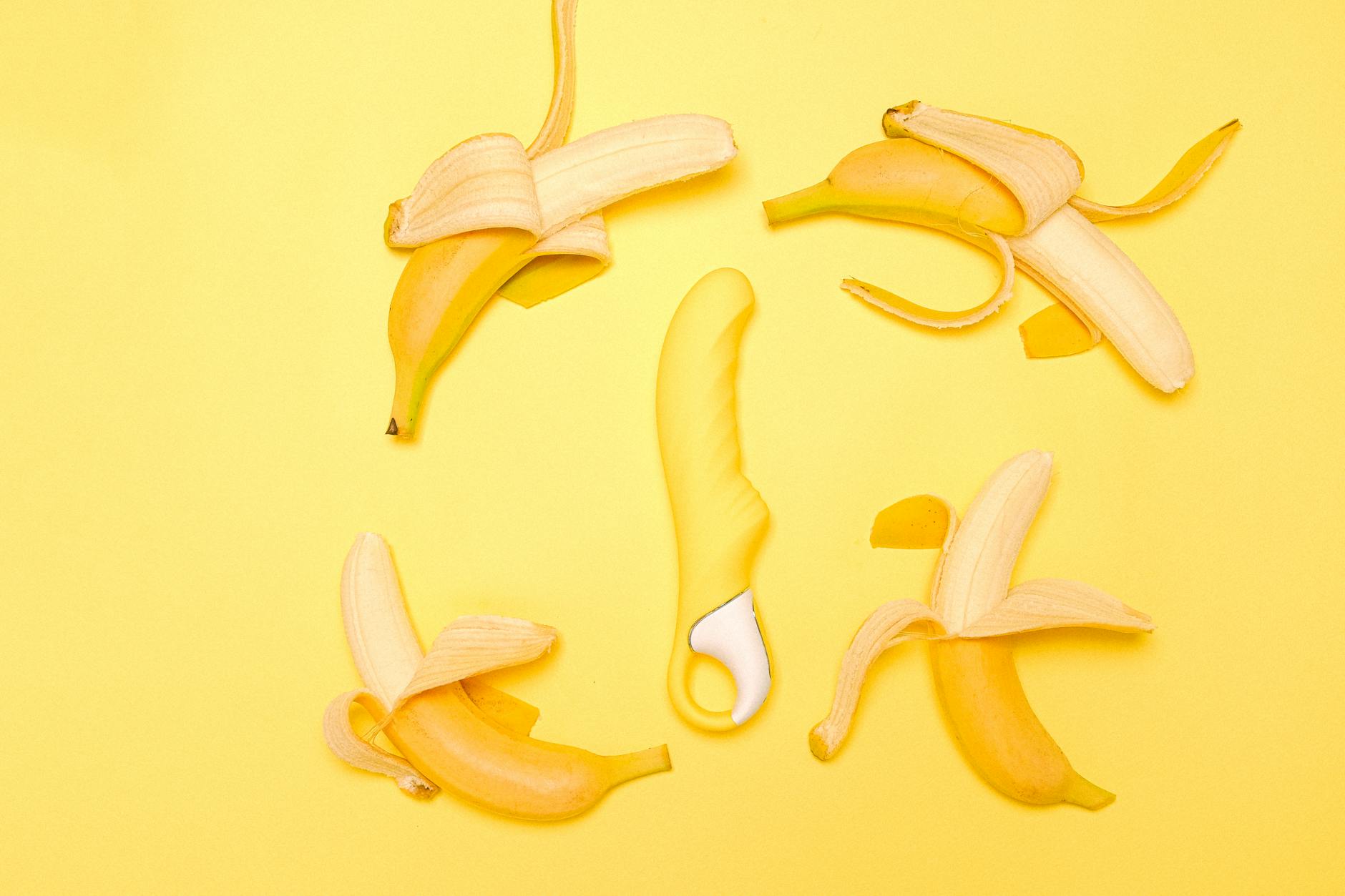
Here's the thing nobody tells you about lemon vibrators
The same device plays two completely different roles depending on whether you're using it alone or with someone else. When you're solo, a lemon clitoral vibrator is your main event. With a partner, it becomes a supporting player in a much larger conversation. The speeds, rhythms, and even the physical positioning shift. Learning when and how to use a lemon vibrator in each scenario is what separates "okay experience" from "actually perfect for what I need right now."
I've worked with plenty of couples who own the same clitoral vibrator but use it in entirely different ways. The device doesn't change. The context does. And that context changes almost everything about how effective it becomes.
What changes between solo and partner play
When you're using a lemon vibrator alone, you control three things completely: pace, pressure, and stopping point. You can spend thirty seconds on pattern five if that's what your body needs. You can shift angles mid-orgasm. You can go again in two minutes or call it done.
With a partner, you're negotiating all three. Their rhythm matters. Their comfort matters. The angle that works for penetration might not be the angle that maximizes your clitoral sensation. You might need to finish quickly if they're close, or stay with lower settings to preserve their arousal while you build yours.
Physically, solo play usually means you're flat on your back or in a comfortable recline, hands free except for the device. Partner play often means you're in a position that serves both of you. Your hips are angled differently. Your hands might be holding them or bracing yourself. The device's position relative to your body shifts.
That's not just comfort. That's sensation. A lemon sucker that feels incredible at a 45-degree angle on your back might feel too intense or miss the mark entirely when you're straddling someone and approaching from above.
Solo play: what lemon clitoral vibrators do best
When you're alone, you're optimizing for one thing. Pleasure. Not negotiation, not timing, not someone else's experience. Yours.
This is where higher intensities actually make sense. Patterns five and six on a lemon clitoral vibrator are faster, more insistent, sometimes almost aggressive. They work beautifully for solo exploration because there's no one else's nervous system in the room. You're not worried about overstimulating a partner or losing their erection or them getting bored.
Solo play is also where you learn your own edges. How long can you stay on pattern three before it becomes too much? Can you orgasm on two, or do you need at least four? Does your preference change throughout your cycle? These are experiments that only happen when you're the sole decision-maker.
I recommend starting with lower patterns when you're learning your lemon vibrator solo. Patterns one through three feel more like a conversation than a conclusion. They let you feel nuance. Once you know your body's map, you can blast through five and six when that's what you need. But that exploration phase is essential, and it's hardest to do when you're performing for someone else.
Partner play: how the role of your lemon vibrator shifts
With a partner, your clitoral vibrator is a bridge. It's not meant to deliver the main event solo. It's meant to help you climax while they're inside you, or to bring you to the edge before penetration, or to finish you while they're still present but no longer the primary stimulation.
Lower patterns work better here. Patterns two, three, and sometimes four. Why? Because a lower pattern leaves room for everything else happening in your body. The pressure from penetration. The sensation of skin on skin. The emotional intensity of eye contact or touch. A full-blast pattern six on a lemon clitoral vibrator can actually eclipse all of that. You're no longer experiencing sex with someone. You're experiencing the vibrator, and someone happens to be there.
Partner play is also where positioning matters wildly. If you're using the lemon vibrator during penetrative sex, angle it slightly downward at maybe 30 degrees, not perpendicular. If you're in a position where your partner can use it on you, they'll find the most effective angle is usually from below, applying gentle pressure upward rather than pressing straight down.
Timing shifts too. Solo, you can spend eight minutes on pattern three. With a partner, four to five minutes is often the sweet spot. You're building toward an orgasm that synchronizes with theirs, or at least arrives while they're still engaged and close. That faster timeline actually works in a lemon sucker's favor because the suction sensation builds momentum quickly.
When to use lower intensities with a partner
If you're someone who normally needs pattern five or six to orgasm solo, don't panic. You won't lose that capacity with a partner around. But you might find that patterns three and four work better in that context because other stimulation is happening simultaneously.
I had a client describe it as "math." Solo, she needed a 7 on intensity to reach orgasm. With her partner, she got a 3 from the lemon vibrator, a 2 from penetration, a 1 from his hand on her back, and a 1 from the emotional intensity of the moment. Total 7. Different math, same result.
If you're reaching for your lemon clitoral vibrator in partner play and pattern three isn't working, the issue usually isn't the vibrator. It's communication. Are they still engaged? Are you relaxed enough to feel pleasure, or are you tense? Has the positioning shifted so the vibrator isn't hitting the right spot anymore? These are conversations to have out loud, not problems to solve by cranking to pattern six.
Solo exploration is where you learn
Honestly, the couples I work with who have the strongest solo and partnered experiences with lemon vibrators are the ones who put time into solo play first. This isn't about being less interested in their partner. It's about knowing your own body deeply enough that you can communicate what you need.
When you've spent time alone discovering that pattern four hits differently on day ten of your cycle, or that you come fastest on pattern three with a side-to-side motion rather than straight pressure, that knowledge transforms partnered play. You can say exactly what you need instead of both of you fumbling.
Solo play with a lemon vibrator is also where you practice pacing. You learn that ramping up slowly works better than starting at maximum intensity. You learn whether you need warm-up time or can jump straight in. You learn if you prefer steady rhythm or pattern variation. All of this becomes gold when you're trying to coordinate with someone else.
What to do if your solo settings don't work with a partner
Most people need to drop down at least one pattern level with a partner present. If you normally use pattern five solo, try starting at pattern three or four. If pattern two is your solo baseline, try pattern one with a partner.
You can also modify the experience without changing intensity. Instead of a steady pattern, try the intermittent pulse patterns. Thirteen and fourteen on many lemon clitoral vibrators offer that broken rhythm that feels different from constant pressure. Some partners actually prefer this because it doesn't compete with the sensation of penetration.
Angle shifts are underrated too. Even without changing intensity, tilting the lemon vibrator five or ten degrees can change the sensation completely. Ask your partner to help you find the angle that feels best. This turns using the device into something you're doing together, not something you're doing while they watch.
Why timing matters in partner play
Solo, you use a lemon sucker until you orgasm, period. Partner play is different. Sometimes you want to use it before sex to get close, then stop and transition to penetration. Sometimes you want to use it during. Sometimes after, to extend your pleasure when they've finished.
There's no wrong answer. But the pattern you choose changes based on what you're optimizing for. If you're using the lemon vibrator to warm up, a lighter pattern that feels good without pushing you to the edge makes sense. If you're using it to orgasm while they're inside you, you want consistency and a rhythm you can relax into.
I recommend talking about this before things get hot. "I want to use the vibrator to get started" sounds very different from "I want to use the vibrator to come." Same device, completely different experience depending on what you both expect.
FAQ: Solo vs. Partner Lemon Vibrator Use
Can I use the same lemon clitoral vibrator settings solo and with a partner?
You can, but most people need to adjust down at least one level. The vibrator stays the same, but your nervous system is managing more input when a partner is present. Lower intensity leaves room for other sensations to come through. It's not that your body changes. It's that your context changes, and your settings should follow.
What pattern should I use on my lemon vibrator during penetrative sex?
Start at pattern two or three and only go higher if you need to. Patterns four through six tend to dominate the sensation landscape and can actually make it harder to feel connection with your partner. The intermittent pulse patterns thirteen and fourteen are wildly popular for partnered play because they create rhythm without constant pressure.
If I can only orgasm on high intensity solo, does that mean I can't orgasm with a partner?
No. When you're with a partner, you're getting input from multiple sources. Penetration adds pressure. Touch adds sensation. Emotional intensity adds to the overall arousal. That cumulative effect means lower intensities on the vibrator often work better, not worse. It's not about losing your capacity. It's about total stimulation adding up faster.
Should I use a lemon vibrator before or during sex with a partner?
Both work, depending on what you're trying to achieve. Before: use a lower pattern to warm up without hitting climax, then transition to penetration. During: maintain a steady lower pattern throughout. After: use whatever pattern feels good to extend pleasure after they've finished. None is inherently better. It's about matching the setting to your intention.
Can my partner use a lemon vibrator on me, or should I always control it?
Partners can absolutely use it, and many couples prefer this because hands can be free for other touch. If your partner is using it, communication is critical. Tell them which patterns feel best, what angle works, and how much pressure you want. This isn't a guessing game. The clearer you are, the better the experience.
Does the size of my lemon vibrator matter differently for solo versus couple play?
For solo play, size is about comfort and what feels good in your hand for extended periods. For couple play, smaller is often better because it's easier to use during penetration without getting in the way. A full-size lemon clitoral vibrator works perfectly solo. A compact design like the Lem might feel easier to position when you're both moving together.