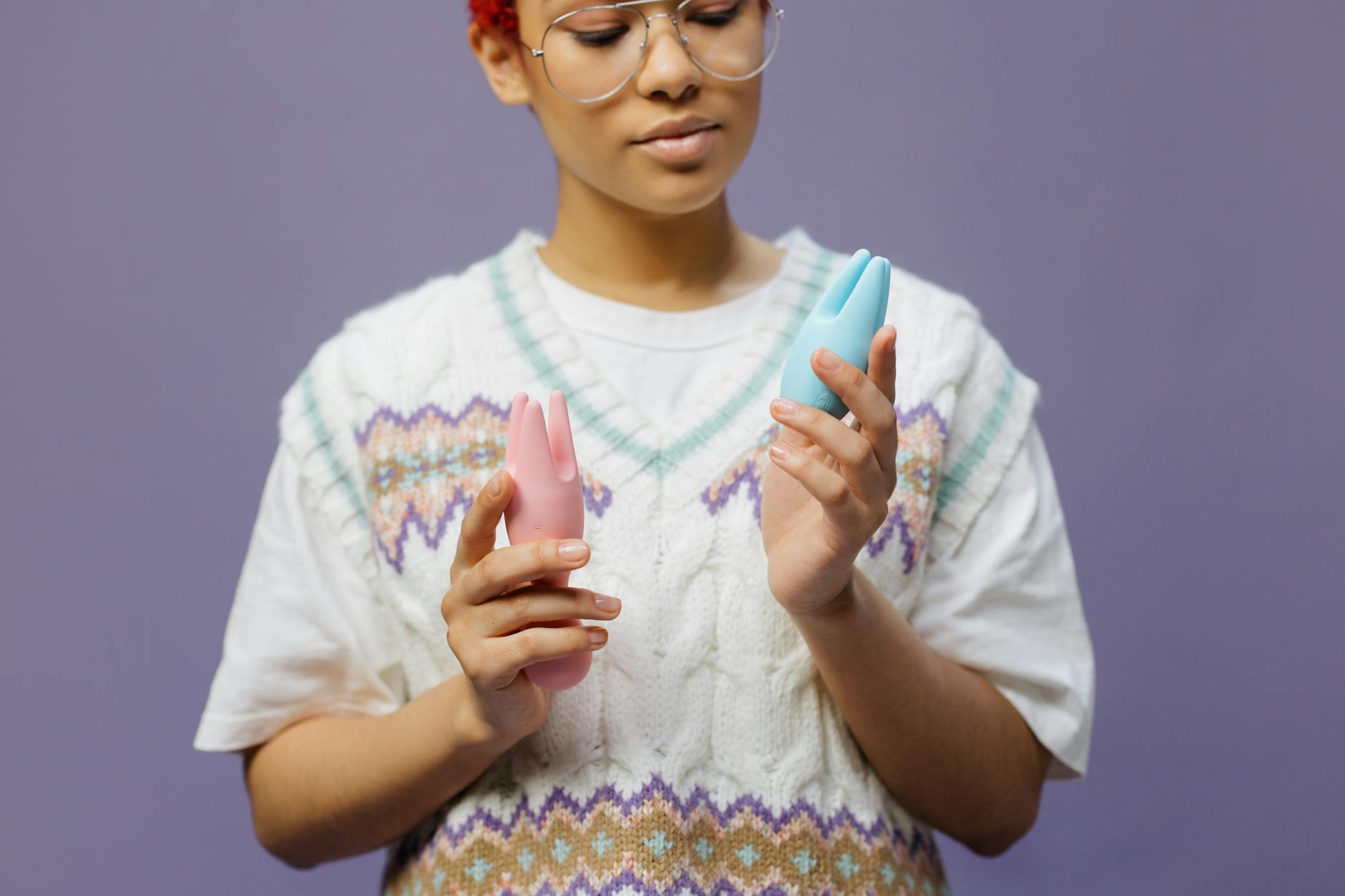
Let's be real about the awkward part
Introducing a lemon vibrator or any clitoral toy to your partner lands in that weird space where the stakes feel higher than they are. You want pleasure. You think a lemon sucker vibrator might help. But the conversation in your head has somehow turned into a full psychological negotiation you haven't actually had yet.
Here's what I hear from people in couples therapy: the anticipation of the conversation is worse than the conversation itself. And the thing that makes it easier is not trying to make it not awkward. It's leaning into the fact that you're both adults who deserve pleasure, and then just saying that out loud.
Why this conversation matters more than you think
It's tempting to skip the conversation entirely. Just order a lemon vibrator and introduce it in the moment, right? Technically possible. Not recommended.
Here's why: introducing a toy without context can feel like criticism ("Your touch isn't enough") or a surprise ("Where did this come from?"). Neither sets up the experience well. A ten-minute conversation beforehand transforms the entire dynamic from awkward surprise to collaborative exploration.
Plus, your partner might have thoughts, questions, or desires of their own. Maybe they've wanted to suggest something and didn't know how. A real conversation opens that door.
The timing matters, but not in the way you think
Don't do this mid-sex. Don't do this right before sex. And for the love of everything, don't do this during conflict.
The best time is a low-stakes moment. Not in bed. Not at night right before sleep (bad timing for vulnerable conversations). Try a weekend morning over coffee, a walk, or even a car ride where you're both facing forward (this makes vulnerable conversations feel less intense for some people).
Pick a time when you're both fed, rested, and not distracted by deadlines or kids or scrolling. Fifteen minutes, max. You don't need an hour for this.
The opening line that actually works
Forget the philosophical preamble. Skip "I've been thinking a lot about our intimacy." Just start here:
"I want to try something that I think could feel really good for me, and I wanted to talk to you about it first. Would you be open to that?"
That's it. You've said: I have a desire, it's about pleasure (not about your inadequacy), and I'm including you in the decision.
Your partner will ask what it is. Then you say:
"I've been reading about clitoral vibrators, and I think a lemon vibrator might be something I'd like to try. It's a toy that uses suction stimulation. I'm telling you because I want us to explore this together, and because your comfort matters to me."
Notice what you've done: named the thing, explained briefly what it does, connected it to shared pleasure, and acknowledged their feelings. Clean and direct.
What to do if your partner says "I thought what we do was enough"
This is the resistance line you're worried about. It usually comes from one of three places: feeling inadequate, not understanding what the toy does, or genuine discomfort with toys.
Your response:
"I love what we do together. This isn't about you not being enough. It's like the difference between a back massage and a back massager. Both are great. They're just different. My body responds differently to clitoral suction than it does to touch, and I'd love to experience that with you here."
You've reframed it: this is about your body's response, not his or her inadequacy. Suction stimulation does hit differently for many people, especially if you experience reduced sensitivity or want more concentrated stimulation. That's science, not criticism.
If your partner is still uncertain, offer to watch a five-minute educational video together (Nancy Official's product pages have clear, non-graphic descriptions of how lemon clitoral vibrators work). Seeing it framed as a tool for shared pleasure, not a replacement for intimacy, helps.
What to say if your partner wants to use it on you
Some partners get excited and want to be the one operating the toy. This is actually a beautiful sign of engagement. You can say:
"I'd love that. Fair warning: I might need to show you where the sweet spot is and when to move it or keep it still. I'll guide you."
This sets expectations (it's not intuitive, and that's fine) and keeps you both involved.
If you'd rather explore it solo first, that's also completely valid:
"I might want to get comfortable with it on my own first, just to learn what feels good. Then we can incorporate it into us time."
Both paths are good. You're not obligated to perform this discovery for an audience.
The conversation about sensation and design
If your partner is genuinely curious, you can talk about what makes a lemon vibrator different from other clitoral toys. This isn't pillow talk. This is information.
"Lemon vibrators use air-pulse suction instead of vibration. For me, that means it stimulates in a gentler, more focused way. Some people describe it as feeling like a suction sensation rather than buzzing." Simple. Factual. Educational.
Your partner might also want to know: will you use it with them? How often? Does this mean you want to change what you're already doing together?
These are fair questions. Answer honestly.
What to do if your partner has concerns
Maybe they're worried about:
Safety: "It's made from medical-grade silicone, totally body-safe, and I've looked into the brand."
Cleanliness: "I'll wash it before and after. It's just like any other piece of shared wellness equipment."
Time: "I don't see this replacing anything we do. Just adding another experience to explore."
Jealousy or insecurity: Go back to the reframe. "This is about my body's pleasure response, not about you being replaced."
If your partner has a big concern you're not equipped to address, and you're both open to it, a sex-positive therapist can help normalize these conversations. That's not failure. That's resourcefulness.
The first time you use it together
Don't overthink it. You've already done the hard part (the conversation). Now you're just exploring.
Start without pressure. Maybe you use it solo while your partner is present, just so they see how it works and that you're genuinely enjoying it. There's zero performance obligation here.
When you do use it together, communicate in the moment: "A little slower," "That angle is perfect," "I want to try just the tip here." He, she, or they are learning your body in a new way. Guidance is generous, not critical.
And if it feels weird the first time, that's normal. Awkwardness on first try doesn't mean the conversation was wrong. It just means you're learning something new together.
The bigger picture: why this matters
Introducing a lemon vibrator to your partnership isn't really about the toy. It's about permission. It's about saying, in front of your partner, "My pleasure is important. Your pleasure is important. And we get to explore this together."
That conversation, done well, changes the baseline of intimacy in your relationship. You've modeled that desires are speakable, that exploration is collaborative, and that pleasure is something you both deserve.
When you get that right, the actual toy becomes almost secondary. The connection is what shifts.
People also ask
What if I've never mentioned anything sexual to my partner before?
This is actually a great opportunity to start. You don't need to have discussed sexuality in detail to introduce a single, concrete desire. In fact, it's often easier to start with "I want to try this specific thing" than with a broad conversation about sexual communication. One concrete object is less abstract and intimidating than "Let's talk more about sex."
Is it weird to want to use a lemon clitoral vibrator alone, not with my partner?
Not at all. You don't owe anyone access to your self-pleasure. The conversation you're having is about transparency and inclusion if you want it, not obligation. "I'm thinking about trying a clitoral vibrator for solo exploration" is a complete, legitimate conversation. Your partner can be supportive without being involved.
What if my partner wants to buy a toy themselves after this conversation?
That's a win. You've created space for both of you to have desires and explore them. Whether you use toys together or separately, you've normalized pleasure in your relationship. That's the whole point.
How do I bring this up if we've been together for decades?
Actually, long-term couples often have an easier time with this. You already know each other. You've survived disagreements. You can say: "I know we've been together a long time and we have a good thing. I want to explore something new together. I think it could be really fun." Length of relationship doesn't mean you've exhausted desire. It means you have a foundation to build from.
What if my partner says no?
Then you have a choice. You can respect that boundary and explore the toy solo (if that feels okay to you). You can ask what specifically is uncomfortable and see if there's a compromise. Or you can recognize this as information about your compatibility and decide how important this is to your overall satisfaction. A good therapist can help you navigate that conversation if it's contentious.
Will introducing a toy change our dynamic in a bad way?
Not if you're communicating honestly. In fact, many couples find that introducing toys together deepens intimacy because you're being vulnerable and collaborative. The risk isn't the toy. It's unspoken resentment. So speak it. That's what this whole conversation is about.
The thing nobody tells you
Your partner might surprise you. They might be thrilled. They might have been wanting to explore toys themselves and didn't know how to bring it up. They might want to order you a gift based on what you describe. Or they might take time to warm up, and that's fine too.
What matters is that you've opened a door. You've said, clearly and without shame, "I deserve pleasure, and I want to explore it with you." That conversation, imperfectly executed, is infinitely better than suffering in silence because you're afraid of awkwardness.
Pleasure is not a luxury. It's a fundamental part of being human. Asking for it, talking about it, exploring it with your partner... that's not demanding. That's generous. You're inviting your partner into your full self.
Start with that frame. Then say the words. Then listen. Then explore. The awkwardness dissolves faster than you think.