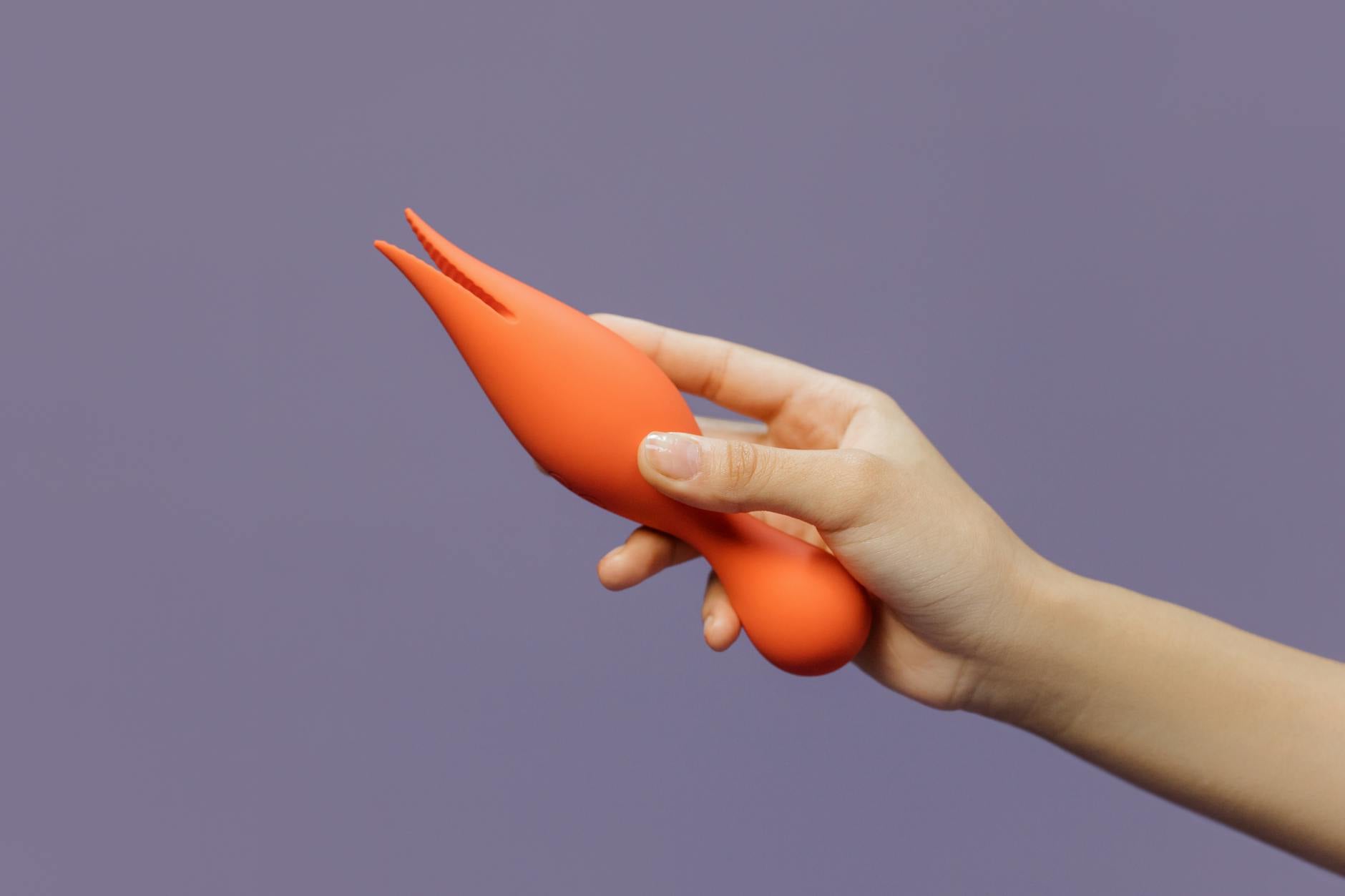
How to Use a Lemon Vibrator When You Have Low Libido
Let's be real. Low libido is not a character flaw. It's a signal that something in your system needs adjusting. Maybe it's stress, maybe it's hormones, maybe it's relationship friction or grief or burnout. The cause matters. But while you're sorting that out, your body is starved for the neurological feedback it needs to remember what desire even feels like.
A lemon vibrator, specifically one that uses air-suction technology like the Lem, can be that reset button. Not because it's magic. Because it works differently than traditional vibration, and that difference matters when your nervous system has learned to stay quiet.
Why low libido doesn't mean no capacity for pleasure
Here's what my clients get wrong: they assume low libido is about the clitoris shutting down. It's not. The nerve endings are still there. The brain's capacity for pleasure is still there. What's happened is the anticipation system has gone offline. The part of your brain that says "this is worth seeking out" has stopped firing.
This is neurologically distinct from erectile dysfunction or vaginal dryness. Those are tissue problems. Low libido is a motivation problem. And motivation responds to novelty, to surprise, to a stimulus strong enough to interrupt the default mode.
When you've spent months (or years) not thinking about sex, your brain gets very efficient at that numbness. Touch becomes background noise. You can lie next to a partner and feel nothing. Solo, there's no spark. This isn't broken. It's adaptive. Your system learned the behavior you've been practicing.
The good news is equally true: systems that learned numbness can learn responsiveness again. But it requires a different input signal.
Why air-suction beats traditional vibration for dormant arousal
Most vibrators work through friction and speed. The Lem works through suction. You place it over the clitoris, and it creates a gentle vacuum that stimulates the entire clitoral complex, including the internal branches you can't see.
For someone with low libido, this is crucial because suction feels novel in a way vibration doesn't. If your body has checked out of traditional stimulation, your nerves have literally stopped responding with as much intensity. Suction activates different nerve fibers. It's a different conversation with your nervous system.
I've had clients tell me that vibrators have done nothing for years. Then they try a lemon sucker, and they feel something. That something is not always intense. Sometimes it's just "huh, that's interesting." But interesting is where desire begins.
The sensation is also less aggressive. Traditional vibrators can feel invasive or demanding when your nervous system is already braced against pleasure. Suction is gentler, more sustained, and weirdly soothing even as it's waking things up.
The mental setup that matters more than the toy
Here's what sabotages most people: they buy the Lem, clear an evening, and try to force arousal. Then they're frustrated because nothing happens, and they've made the problem worse.
Low libido recovery is not performance. It's exploration. The goal is never orgasm on day one. The goal is noticing sensation. That's it.
Before you even touch the toy, you need to clear the performance pressure. Tell your partner (if you have one) that you're doing something for yourself, on your timeline, and there's no expectation of sex after. If you live alone, you still need this permission. Tell yourself: tonight is just about seeing if my body can feel something. Nothing has to happen.
Then set your environment like you mean it. Warm room. No phone. Comfortable surface. You're not trying to perform sensuality for anyone. You're trying to give your nervous system permission to notice.
The actual technique: how to restart desire
Start with the Lem on the lowest setting. For most people with low libido, the high settings feel overwhelming. Your system isn't ready. Lower settings let you notice sensation without being blasted by it.
Place it over your clitoris and hold still for 30 seconds. Don't move, don't think about what should be happening. Just feel. Notice the pressure, the vibration, the warmth of the device. That noticing is the whole work.
After 30 seconds, move it very slightly to the left. Hold for 30 seconds. Then slightly right. Then slightly up. You're not searching for the magic spot. You're teaching your nervous system that this device exists, and your body can have a relationship with it.
Do this for about 10 minutes total on your first session. Ten minutes, lowest setting, no pressure for anything to happen. Then stop.
Your brain will spend the next few hours integrating that sensation. You might feel subtly more awake. You might not notice anything dramatic. That's fine. You've just told your nervous system that pleasure is back on the menu.
Repeat this 2-3 times a week for at least two weeks before you try to escalate anything.
Why the first orgasm matters less than you think
Most recovery protocols tell you to keep going until you come. That's pressure. If low libido is your issue, forcing an orgasm doesn't fix it. You need to rebuild the anticipation system first.
After two weeks of 10-minute sessions on low settings, your brain will start remembering what pleasure is. Then you can gradually turn the setting up. Maybe to pattern 2 or 3. Still no goal. Still just noticing.
When an orgasm happens, it will likely be different than you remember. It might be smaller. It might feel less intense. That's not failure. That's recovery. Your nervous system is calibrating back to baseline.
I tell clients: if you get one real orgasm after four weeks of practice, you've broken the spell. Your body knows it's possible again. Everything after that is just practice.
The partner conversation you probably need to have
If you have a partner, low libido in a relationship is complicated. Your partner might feel rejected. You might feel pressure. The last thing you need is pressure while you're trying to rebuild desire.
Have this conversation outside the bedroom: "I'm working on resetting my arousal. This is for me. I need space to do it without expectation. Can you give me that?"
Then set a boundary: certain nights are solo exploration nights. No penetration attempts, no pressure. Your partner can still have sex, but not with you that night. This protects your recovery work from becoming another obligation.
Many couples find that when one partner stops performing and starts actually healing, the desire comes back faster and feels real. The fake effort stops. The real curiosity returns.
When to know if this is working
By week 3, you should notice at least one small shift. Maybe you think about sex once when you weren't planning to. Maybe a session with the Lem feels less like a chore. Maybe you leave it in a visible place instead of hiding it in a drawer.
These are not big wins. But they're proof that the system is waking up.
If after four weeks of consistent practice you're still feeling nothing, it's worth talking to a doctor. Low libido can signal thyroid issues, hormonal imbalances, depression, or medication side effects. A vibrator won't fix those. But getting checked gives you actual information.
The underlying truth about desire
Desire is not something you have or don't have. It's something you practice. Every time you notice pleasure, you're training your brain to anticipate it again. Every time you touch yourself with attention, you're rebuilding the neural pathway that says "this is worth doing."
The Lem is a tool. A really good one, because suction bypasses the numbness that traditional vibration sometimes can't touch. But the tool only works if you show up consistently and without judgment.
Low libido doesn't mean you're broken. It means you stopped practicing desire. Starting again is uncomfortable. It's slow. But it's absolutely possible. And for most people, it's way faster than they expect.
People Also Ask
How long does it take for libido to come back with a lemon vibrator?
Most people notice a shift within 2-4 weeks of consistent 2-3x weekly use. But "shift" doesn't mean full recovery. You might notice a single spontaneous thought about sex, or a session that feels less like obligation. Real, sustained libido usually takes 6-8 weeks of practice. The first orgasm often comes sooner, but that's not the goal. Consistent interest is.
Can I use the Lem if I'm on antidepressants that lower libido?
Yes, and it often helps. Antidepressants that affect serotonin (like SSRIs) can numb sensation and lower arousal. The Lem's suction technology activates different nerve pathways than traditional vibration, so it sometimes bypasses that numbness. That said, if medication is the cause of your low libido, talk to your prescriber about timing, dosage, or alternatives. The vibrator is a tool, not a replacement for medical adjustments.
Is it normal to feel nothing the first time I use a lemon clitoral vibrator?
Completely normal. If your nervous system has been in numbness mode for months, one session won't flip a switch. Think of the first few sessions as introducing the device to your body, not as trying to achieve anything. You're building familiarity. Sensation returns gradually. If you feel absolutely zero physical sensation across multiple sessions, make sure the device is charged, the seal is tight, and you're on the lowest setting. If nothing changes, see a doctor.
Should I try the Lem alone or with my partner?
Start alone. When you're recovering from low libido, a partner's presence adds performance pressure, even if they're trying to be supportive. You need space to fail quietly and explore without judgment. Once you've had a few sessions solo and feel more confident, you can decide whether to include a partner. Many couples find that solo exploration actually improves partnered sex because desire becomes real again instead of performed.
What if the suction setting is too strong even on the lowest level?
The Lem is designed with graduated patterns that are gentler than its competitors, but if even the lowest setting feels too intense, try these: hold it slightly away from your clitoris instead of directly over it, create a thin fabric barrier (like a thin cotton shirt), or use it over your underwear at first. Your nervous system will acclimate over time. Start with what you can tolerate and gradually increase contact as your sensitivity returns.
Can low libido come back on its own without a toy?
Sometimes, but usually it needs an intervention. If your low libido is situational (stress from a work project, a recent breakup), it might return naturally once the stressor passes. But if it's been months or years, your brain has built strong neural pathways around numbness. A novel stimulus like the Lem can interrupt that pattern faster than waiting for it to resolve on its own. The toy is an accelerant, not a requirement.