The refractory period mismatch nobody talks about
Here's the thing about sex with a partner: you're two different biological systems operating on different timelines. One of the most invisible mismatches is the refractory period, which is the recovery time your body needs after orgasm before it can orgasm again. For some people, that's three to five minutes. For others, it's thirty or forty.
This isn't a flaw. It's just how bodies work. But it creates a real problem in the bedroom. One partner finishes, feels satisfied, and is genuinely done. The other partner is still building, or wants more, or feels abandoned. Neither person is wrong. You're just recovering at different speeds.
I've worked with couples where this mismatch creates actual resentment over time. Not because the sex is bad, but because the rhythm never quite aligns. One person feels pressured to perform before they're ready. The other feels left out of the continuation. A lemon vibrator solves this in a way that nothing else can.
Why refractory periods differ so wildly
Refractory period length depends on several factors, and they're different for every person.
Age matters, but not how you think. Yes, refractory periods tend to lengthen with age, but the variation between individuals is huge. A 35-year-old might have a five-minute refractory period while their 28-year-old partner needs forty-five minutes. It's not predictable.
Hormones play a direct role. Testosterone affects recovery speed, which is why people with higher baseline testosterone often have shorter refractory periods. But birth control, other medications, and hormonal fluctuations change this month to month.
Physiology of the nervous system matters too. Some people's parasympathetic nervous system (the recovery system) activates faster than others. This is partly genetic and partly learned.
Arousal pattern makes a difference. People who build arousal quickly often recover quickly. People who need more time to build arousal often need more time to recover. It's not random.
The key is this: mismatched refractory periods are completely normal and extremely common. What's not common is couples actually talking about it and solving it.
The problem with ignoring the mismatch
When refractory periods don't align, one of three things usually happens, and none of them feel great.
The faster-recovering partner waits. They lie there, already satisfied but trying to be considerate, while their slower-recovering partner supposedly "gets there." This breeds resentment because waiting isn't actually sexy. It's performative.
The slower-recovering partner feels pressured to keep going. They haven't recovered yet and don't want more stimulation, but they sense their partner wants to continue, so they push through discomfort to be a "good partner." That's a recipe for disconnection and eventually, avoidance of sex altogether.
Both people do separate things. One reaches for their phone while the other is still trying to get back into it. You're physically together but emotionally checked out.
None of these is sustainable long-term. Couples who can't sync their refractory periods start having less sex, not because desire has disappeared, but because the rhythm feels broken.
How a lemon vibrator changes the dynamic
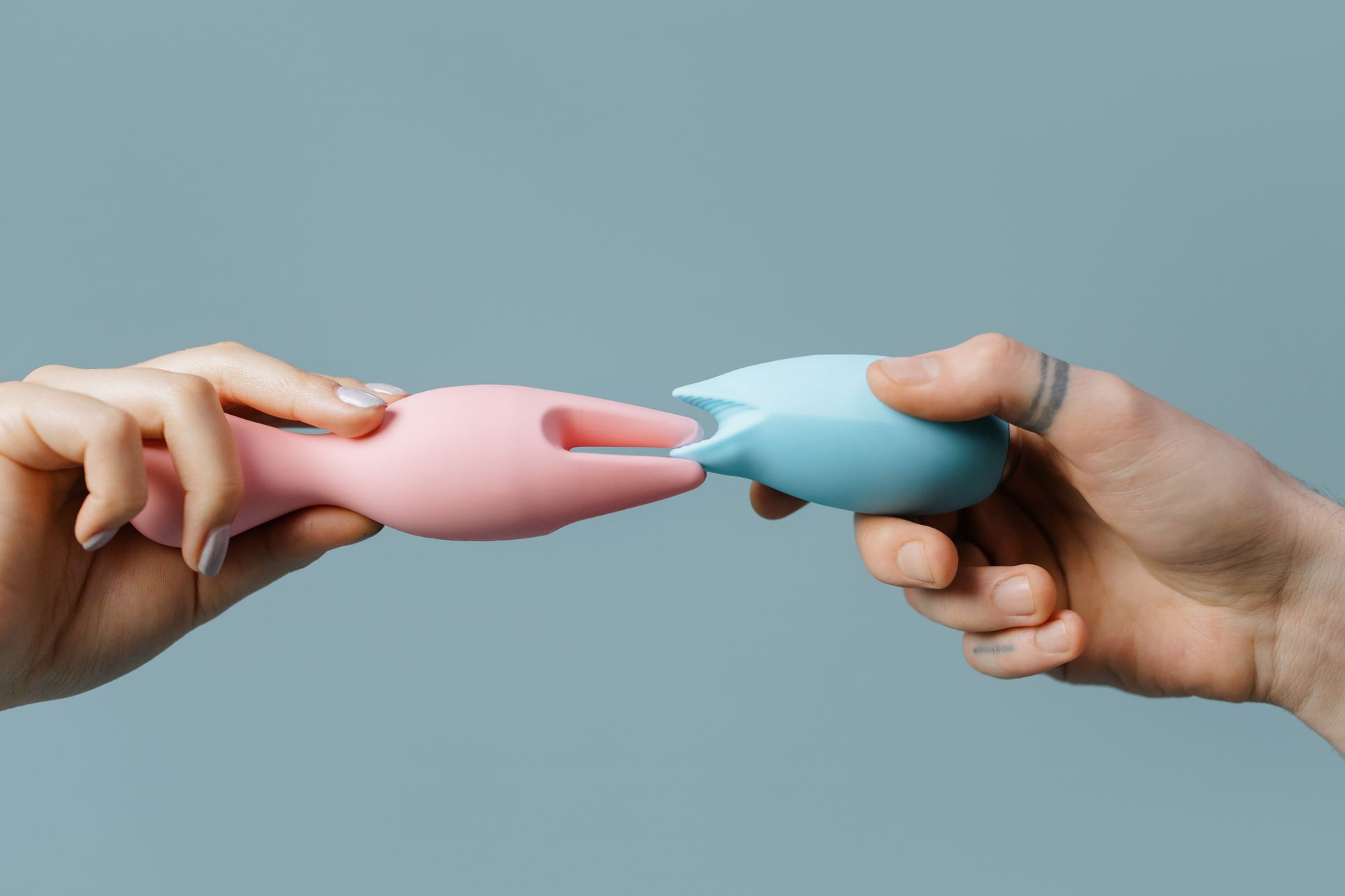
A lemon vibrator, or any air-suction clitoral toy like the Nancy Lem, creates a bridge between these two timelines.
The mechanism is simple but powerful. Air-suction toys deliver stimulation in a completely different way than penetration or manual touch. They're fast, precise, and deeply pleasurable. More importantly, they require almost no recovery time from a partner. You're not asking your slower-recovering partner to do more work. You're giving them something to enjoy while they recover.
Here's what this looks like in practice. Partner A finishes first. Partner B is still in the game but hasn't peaked. Instead of Partner A either waiting or doing nothing, Partner A reaches for the lemon vibrator and uses it on Partner B. This accomplishes three things simultaneously.
First, it keeps the sexual energy alive. It's not a break in the action. It's a continuation.
Second, it gives Partner A something active and engaged to do while their refractory period is happening. They're not waiting. They're participating.
Third, it often brings Partner B to orgasm faster than traditional stimulation would, which means the experience doesn't drag on indefinitely.
The practical setup
If your refractory periods don't align, here's how to use a lemon vibrator effectively with your partner.
Start the conversation beforehand. This sounds clinical, but it's crucial. You need to agree that you're going to try this and that neither person will feel rejected or inadequate. Say something like, "I want to keep going after I come, but I know your body needs a minute to recover. What if we tried using the lemon vibrator together after?" Frame it as a solution, not a workaround.
Have the toy within arm's reach. This isn't about spontaneity. It's about reducing friction. Keep the lemon vibrator on the nightstand, not in a drawer three rooms away. When you're in the moment, reaching over two inches is fine. Walking to find it kills the mood.
Start with low intensity. If your partner has just come, their sensitivity might be heightened. Begin on the first or second pattern with a lemon vibrator, not the max setting. You can always increase intensity, but you can't un-startle someone.
Take turns being the one who uses it. This isn't about the faster-recovering partner always wielding the toy. Swap roles sometimes. The slower-recovering partner can use the vibrator on their faster-recovering partner during their refractory period too. It's not gendered and it's not always the same person doing the work.
Use it as a transition, not a separate thing. The lemon vibrator shouldn't feel like "well, now you get your turn with the toy while I lie here." It should feel like a natural evolution of what's already happening. Stay connected. Maintain eye contact. Keep one hand on your partner's body.
Timing and pacing
Refractory periods vary wildly, even within the same person from day to day. So you need flexibility.
Some people's bodies need complete stillness for five minutes before any touch feels good. Others want touch immediately after orgasm but not intense clitoral stimulation. Ask your partner what their body actually needs, not what you assume.
A common pattern is: orgasm happens, partner rests for 2-3 minutes with light, non-genital touch (hand holding, cuddling, kissing shoulders), then as the next wave of arousal builds, the lemon vibrator comes into play.
With air-suction toys specifically, the pattern is often faster. Many people build back to arousal more quickly with the lemon sucker than they would with manual touch. This might mean your full refractory period actually gets shorter when using the toy.
When this solves deeper issues
Here's something I've noticed clinically. When couples sync their sexual rhythm using tools like a lemon clitoral vibrator, they often report that their overall sexual satisfaction increases. Not just in that moment, but generally.
Why? Because the pressure drops. When you know there's a way to keep both people engaged even if your refractory periods don't align naturally, you stop resenting the mismatch. You stop rushing recovery. You stop feeling abandoned.
Some couples tell me that using a lemon vibrator together during mismatched refractory periods became their favorite part of sex. It created space for play, for both people to focus on pleasure without having to perform recovery.
The fastest way to kill passion isn't incompatibility. It's pretending incompatibilities don't exist and hoping they'll go away on their own.
FAQ
How do I know if my refractory period is "normal"?
There's no normal. Refractory periods range from seconds to hours. If yours has never bothered you or your partner, it probably doesn't need to. If it's creating friction in the relationship, that's the signal to address it.
Will using a lemon vibrator shorten my refractory period permanently?
No. The refractory period itself doesn't change, but the toys can make the transition easier and sometimes faster. The biological reset still happens on your body's timeline. What changes is the experience feels less awkward.
Can we use the lemon sucker if one partner has never used toys before?
Absolutely. In fact, mismatched refractory periods is one of the best reasons to introduce a lemon vibrator into partnered sex. You're solving a real problem, not adding complexity for complexity's sake. Start on the lowest setting and go slowly.
What if my partner finishes first but I want them to keep touching me without a toy?
That's fair. Some people's nervous systems genuinely need complete rest after orgasm. You can ask for non-genital touch while they recover, then use a lemon vibrator solo on yourself while they rest. Or you can use the vibrator together as a bridge. It depends on what both of you want.
Does this work for same-sex couples?
Yes, completely. Refractory periods aren't gendered. Whether you have partners with a vulva and a vulva, a penis and a penis, or any other combination, mismatched recovery times are real and air-suction toys solve the problem the same way.
How long does a lemon vibrator battery last during partnered sex?
Most quality toys like the Nancy Lem last 60-90 minutes on a full charge, which is way longer than you'll need. Charge it fully before sex and you're good.
The bottom line
Refractory periods are one of those biological facts that nobody explains but everyone experiences. When partners' timelines don't align, it creates tension that has nothing to do with desire or love. It's just logistics.
Using a lemon vibrator bridges that gap. It keeps both of you engaged, it removes the pressure to perform recovery before you're ready, and it often makes the experience more pleasurable for both people.
Start the conversation. Set expectations. Keep the toy within reach. Then let your bodies do what they do. You've already solved the hard part.
If you want help thinking through what might work best for your specific situation, reach out to us. We're here to help couples navigate these exact questions.
Related reading
If mismatched desire is part of the refractory period issue, you might also find this helpful: How to Use a Lemon Vibrator With a Partner When One Person Has Higher Desire.
And if you're still building confidence with air-suction toys in general, we walk through the basics here: How to Use a Lemon Vibrator When First Trying Air-Suction Toys.