
Let's talk about the gap
There's a difference between taking time off sex because you wanted a break and finding yourself in a relationship that's stalled. One feels like rest. The other feels like loss. When you're returning to your own pleasure after months or years of not touching yourself, or after a physical separation from a partner, your body doesn't just pick up where it left off. The pathways are still there. The capacity is still there. But the muscle memory, the confidence, the physical responsiveness? That needs gentle reconstruction.
This is where air-suction clitoral vibrators like the Lem become genuinely transformative. They're not just toys. They're a reset button.
Why sensation resets after a break
When you don't engage in sexual touch for months, a few things happen. Your nervous system deprioritizes arousal signals. Pelvic blood flow diminishes slightly. Your mental bandwidth, which is huge for pleasure, gets consumed by other things. If the break happened because of relationship stress or physical separation, there's often emotional guardedness layered on top. Your body learned not to expect touch.
Add in the fact that many people use numbing lubes, or masturbate in rushed, friction-based ways, and you've essentially trained your nervous system to expect one type of input. When you want to rebuild, that conditioning is real.
Air-suction vibrators work differently than traditional vibration. Instead of relying on rapid mechanical movement, they use rhythmic suction that engages the entire clitoral complex. This means they tend to bypass the desensitization that can happen with standard vibrators. For someone restarting, that's a huge advantage.
The first few sessions: what to expect
Here's the honest version. Your first session back might not feel amazing. That's not a failure. That's normal.
Start with 10 to 15 minutes alone, no pressure to orgasm. Use your Lem on the lowest setting. (Nancy's lemon clitoral vibrator has intuitive settings, so pattern 1 or 2 is your baseline.) Spend the first five minutes just learning how the sensation registers. Your clitoris is likely less engorged than it was when you were regularly aroused. That means you might not feel the intensity you remember. This changes.
Approach the first few weeks like you're rekindling a friendship that's gone dormant. You're not trying to be best friends again immediately. You're remembering why you liked spending time together.
Rebuilding pelvic blood flow and sensitivity
Consistent, gentle touch increases blood flow to your vulva. This isn't mystical. It's basic vascular biology. The more you engage, the more engorged tissue becomes, the more sensitive nerve endings are, the faster arousal happens.
For the first two weeks, aim for three to four solo sessions weekly. Not because you have to finish every time. Because regularity matters more than intensity. Even 10 minutes of exploration at a comfortable level (patterns 1 through 3 on the Lem) rebuilds that responsiveness faster than occasional intense sessions.
Most people notice the shift around week three. Arousal starts happening earlier. Sensation feels sharper. Orgasm, if it happens, feels more present.
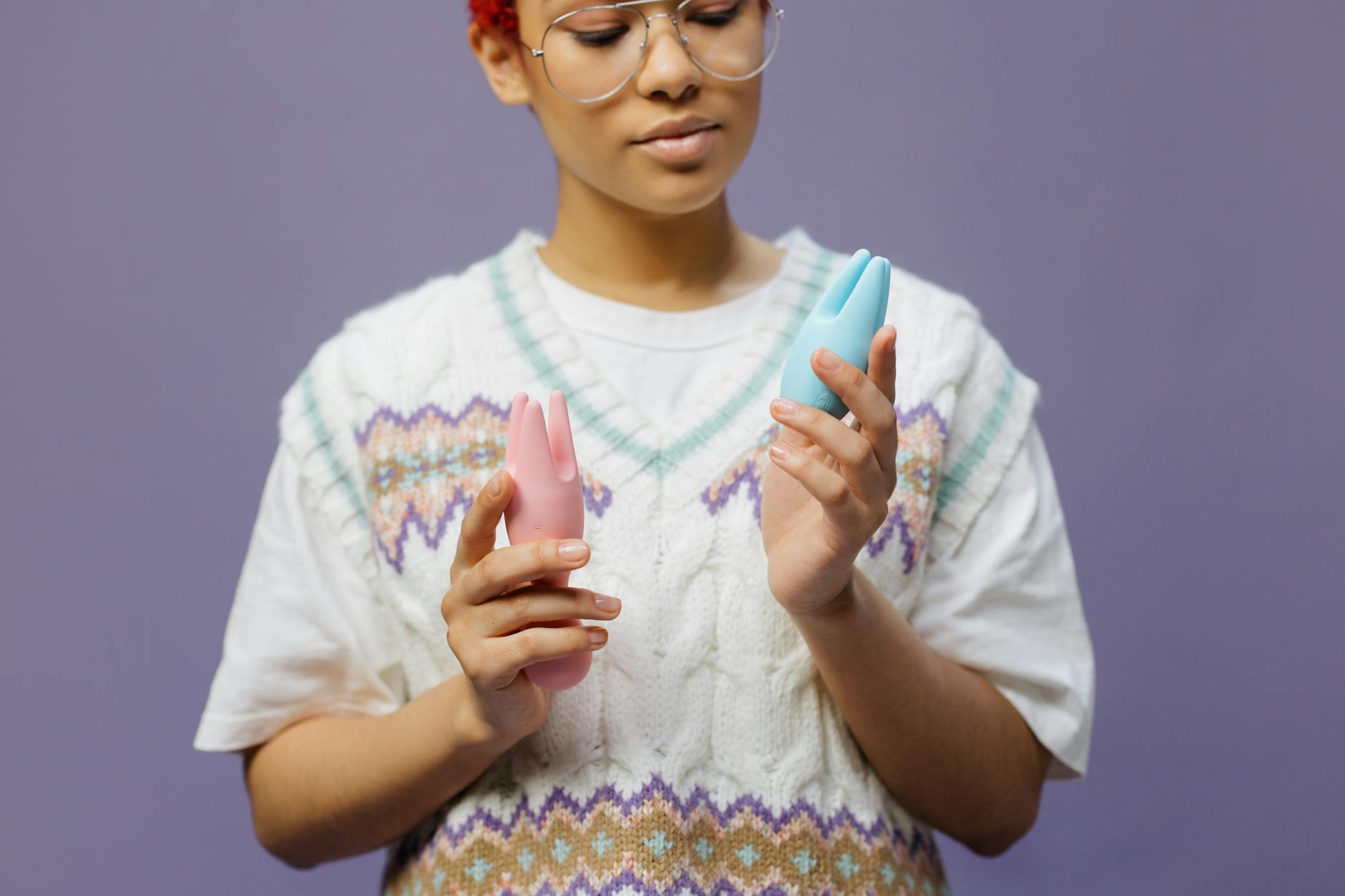
Photo by cottonbro studio on Pexels
The mental piece is just as physical
If the break happened because the relationship felt unsafe, or because emotional intimacy fractured, your body carries that. You might find yourself hesitating mid-pleasure. You might feel subtle guilt. Your mind might wander. These are protective mechanisms, not signs that pleasure is broken.
When you're using the Lem solo, you're creating a situation with zero external pressure. No one's watching. No one's expecting anything. Your only job is to follow what feels good in the moment. This is actually the fastest way to rebuild trust in your own body.
If you're returning to partnered sex after a break, there's a separate conversation happening. Solo exploration should come first. Once you've reconnected with your own sensation, partnered touch becomes easier, because you already know what you're working with.
Transitioning to partnered play
Let's say you're both ready. Your partner is invited into the bedroom, and you're considering bringing the Lem into partnered play. Here's the framework: Start with the same low settings you've been using solo. This isn't the time to show off what the device can do. It's the time to let your partner see you feeling good.
Many couples find that using the Lem together actually heals a relational gap faster than penetrative sex. It's lower pressure. It's visually intimate. It directly engages the most sensitive part of your vulva. And it removes the expectation that your partner's hand or body has to do the entire job of bringing you to orgasm.
One note: if your partner has touch resentment (they feel like you should only come from their effort, or they feel insecure about the toy), that's worth naming and discussing before you bring it into bed. That's a relationship conversation, not a pleasure conversation. Couples therapy or direct communication often helps more than the toy itself in that scenario.
Pacing your progression
Week 1-2: Solo, lowest settings, no orgasm goal. Week 3-4: Solo, patterns 1-4, permission to orgasm if it happens. Week 5-6: Solo exploration with new patterns and durations. Week 7+: Solo play is solid. Introduce partner touch if applicable. Week 9+: Try partnered play with the Lem if both people want it.
This sounds slow. It's not. Most people who follow this actually rebuild full sensitivity and pleasure capacity in 8-10 weeks. Rushing into intensity or orgasm pressure often extends the timeline because it reactivates the nervous system's protective shutdown.
When sensation still feels muted
If you're three months in and arousal still feels distant, a few factors are worth checking.
First, medication. Anti-anxiety drugs, SSRIs, hormonal birth control, and even some blood pressure meds can dampen sensation. If you started taking something during or after your break, that might be the reason. Talk to your doctor. Sometimes a dose adjustment or switching medications helps. You don't have to accept reduced pleasure as permanent.
Second, hydration and sleep. I know this sounds boring, but dehydration and sleep deprivation genuinely suppress arousal signals. Your nervous system can't prioritize pleasure when it's in survival mode.
Third, what you're telling yourself about your body. If you're using the lemon vibrator while thinking "this should feel better than it does" or "I'm broken," your nervous system is getting a mixed message. The tool works better when you approach it with neutral curiosity rather than performance pressure.
The role of lubrication
After a long break, your body might not produce as much natural lubrication initially. This is temporary. But in the meantime, water-based lubricant is your friend. Use it generously. It's not a sign that something's wrong. It's smart preparation that lets you actually feel what the Lem is doing, rather than experiencing friction or discomfort.
As you reconnect and arousal builds more reliably, natural lubrication usually catches up. But don't wait for that to happen before you start exploring again.
A note on patience as a skill
Rebuilding pleasure after a relationship break isn't something you can rush by willpower. Your body needs time to relearn that touch is safe and that arousal is possible again. The Lem, with its gentle, rhythmic suction, makes that relearning easier than traditional vibrators because there's less demand on your tissue to respond to aggressive stimulation.
Most people who use an air-suction clitoral vibrator during this phase report that reconnection feels faster and more authentic than they expected. That's because the tool itself does less interference. It just creates conditions where your own nervous system can remember what pleasure feels like.
FAQs
How long does it take for sensation to return after months without sex?
Most people notice measurable improvement in arousal and sensitivity within three to four weeks of consistent, gentle exploration. Full reconnection usually takes eight to twelve weeks. This assumes you're not dealing with medication side effects or significant relationship trauma. If either of those is present, timeline can extend, and it might be worth working with a therapist alongside solo exploration.
Is it normal to feel guilty using a vibrator when you're trying to rebuild a relationship?
Completely normal. Solo pleasure sometimes feels like a betrayal if the relationship broke because of physical distance or emotional withdrawal. But here's the reframe: reconnecting with your own arousal capacity actually makes partnered sex better, not worse. You're not choosing the toy over your partner. You're building the nervous system capacity that makes partnered touch feel better too.
Should I tell my partner I'm using the Lem to rebuild sensation?
That depends on your relationship safety and your personal preference. Some couples find that transparency builds trust and makes the eventual partnered conversation easier. Others prefer to keep solo exploration private, at least initially. There's no universal right answer. If you're doing it because you need privacy and autonomy, that's valid. If you're hiding it because you're ashamed, that's worth examining separately.
Can a lemon vibrator fix a relationship that's lost sexual connection?
Not by itself. The Lem can rebuild your personal sensation and arousal. It can make partnered sex feel better. But it can't fix emotional distance, betrayal, or incompatibility. If the relationship break happened because of a deeper rupture, the toy helps with the physical part of reconnection. The relational part usually needs direct conversation, possibly with a therapist.
What if I orgasm during the rebuild process but it feels different than it used to?
Orgasms often feel different after a break. They might be shallower at first. They might be more concentrated. They might take longer to build. All of this is normal. Your nervous system is recalibrating. Give it time. Most people report that orgasms feel richer and more intense after three months of consistent reconnection than they did before the break.
Is water-based lube necessary, or can I use what I used before?
If you used silicone-based lube before, that's fine with the Lem (silicone toys need silicone lube, but the Lem is medical-grade silicone, so both work). Water-based lube is lighter and lets you feel sensation more clearly if your tissue is sensitive from the break. Try both and see what your body prefers. There's no wrong choice, just what works for your nervous system.
The bigger picture
Restarting pleasure after a relationship break isn't about getting back to baseline. It's often about building something better. You're reconnecting without the old patterns that might have dimmed sensation in the first place. You're learning what your body actually needs, not what you thought it should want. That's worth taking time for. The lemon clitoral vibrator, with its gentle, focused approach to stimulation, makes that process feel easier and faster than you might expect. Your pleasure matters. And it's worth rebuilding carefully.