Here's what nobody tells you about sensation and hormones
Your body isn't breaking. It's translating. When hormones shift, whether from birth control, menstruation, perimenopause, or medication, the nerve endings in your clitoris don't vanish. The tissue around them changes density. Blood flow patterns shift. Lubrication responds differently. That's not loss. That's reorganization. And if you know how to work with it instead of against it, a lemon vibrator becomes radically more effective.
How hormonal fluctuations actually change clitoral sensation
Let me walk you through the physiology without the jargon. Estrogen affects tissue thickness and blood vessel expansion. When estrogen is higher, tissues plump slightly. Blood reaches the clitoral area more readily. Arousal builds faster, and stimulation feels direct and sharp. When estrogen drops (whether cyclically or long-term), tissue becomes thinner. The nerve density stays the same, but the nerves sit closer to the surface. That means sensation can feel either sharper or more dispersed, depending on the pressure you're applying.
Progestin (from hormonal birth control or progesterone shifts) adds a second layer. It can suppress vasocongestion. Your clitoris might not engorge as fully. Arousal takes longer. But here's the useful part: this doesn't mean less sensation. It means sensation becomes less about fast engorgement and more about sustained, deeper stimulation.
Testosterone is often overlooked in this conversation, but it's crucial. All bodies with ovaries produce testosterone, and it directly fuels sexual desire and clitoral sensitivity. Hormonal birth control typically suppresses testosterone. Some people notice their clitoris becomes less reactive to light touch. Others find they need longer warm-up. Neither is wrong. Both are signals that your approach needs to adjust.
Why lemon vibrators work differently across your cycle or with hormonal shifts
A lemon vibrator uses gentle suction and pulsing stimulation rather than pure vibration. This matters more than you'd think when hormones are in flux. Here's why.
When estrogen is higher and tissue is plumper, direct vibration often feels intense quickly. Suction distributes pressure differently, creating a gathering sensation rather than a sharp buzz. That feels grounding instead of overwhelming.
When estrogen is lower and tissue thins, traditional vibrators can feel too piercing. Suction stimulation on a lemon vibrator engages the entire clitoral structure (including the internal branches you can't see). That means you're activating more nerves across a wider area with gentler pressure per square millimeter. The sensation spreads out instead of concentrating in one point.
Testosterone fluctuation is where the real shift happens. When testosterone is higher, your clitoris responds faster. A lemon vibrator on a lower pattern feels sufficient. When testosterone is lower (common on hormonal birth control), you might need a higher setting or longer duration to reach the same sensation threshold. The good news? That's not a loss of capacity. It's a shift in what works.
Practical adjustments for different hormonal phases
If you track your cycle, or if you're on hormonal birth control and stable, here's what I recommend my clients actually do.
Higher estrogen phase (follicular, or if you're not cycling). Start at pattern 1 or 2 on the lemon vibrator. Pressure matters more than intensity. Place it directly on your clitoris and let the suction do the work. You might find that 3 to 5 minutes is enough. Your tissues respond more readily right now. Don't force intensity you don't need.
Lower estrogen phase (luteal or menstrual, or post-hormonal change). Move to pattern 3 or 4. Your clitoris will need a bit longer to respond, so budget 10 to 15 minutes for warm-up. This isn't laziness on your body's part. This is neurological fact. More sustained stimulation helps with vasocongestion when hormones aren't doing that work for you. You might also notice that the sensation feels more internal. That's the suction engaging your clitoral roots. Lean into it.
On hormonal birth control. Your hormones stay relatively flat. That's actually permission to find a sweet spot and stay there, rather than constantly adjusting. Most of my clients on the pill find that pattern 2 or 3 on the lemon vibrator works consistently month to month. The trade-off? You might need slightly longer warm-up than you did before you started the pill. That's normal. Plan for it.
How to use a lemon clitoral vibrator when sensitivity feels dulled
This is the question I hear most often, and it deserves its own section. People worry their sensitivity is gone. It isn't. It's shifted.
If you're on birth control or in a hormonal phase where sensation feels muted, three things help immediately. First, extend your warm-up. Let your nervous system have time to wake up. This doesn't mean you're doing something wrong. This means your body needs a slightly longer runway. Most people find that 5 to 10 minutes of foreplay or lower-intensity stimulation brings sensitivity online.
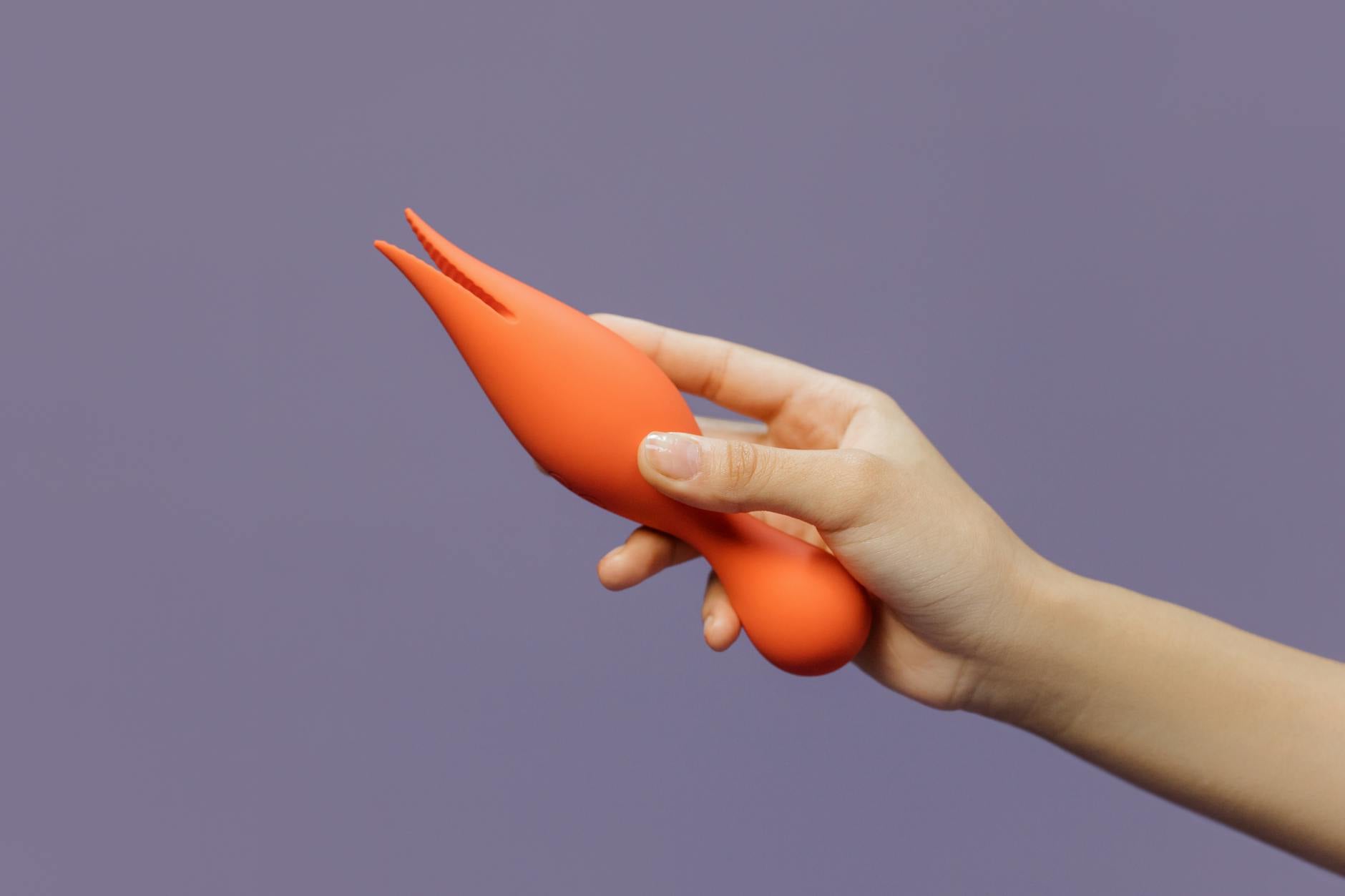
Second, focus on the shape of the lemon vibrator's opening. A lemon vibrator is designed to encircle your clitoris, not hover near it. The seal matters. When you position it, align it so the cup sits fully over your clitoral head. That seal creates the suction that actually does the work. If sensation feels flat, your positioning is probably off by a centimeter. Adjust. That single shift can feel like switching from muted to high-definition.
Third, give yourself permission to use higher patterns. If pattern 1 feels like nothing, jump to pattern 3. There's no medal for using the gentlest setting. Your nervous system needs what it needs right now. That changes. Use what works.

Photo by Hanna Brovko on Pexels
When to reach for a lemon vibrator instead of other options
Honestly, a lemon vibrator is particularly useful during hormonal shifts specifically because of how it works. It doesn't rely on you being at a particular hormonal baseline. You can adjust pattern, duration, and positioning. A traditional vibrator is binary. It buzzes at one frequency. You either like it or you don't. A lemon vibrator gives you more control when your baseline is moving.
I also recommend the lemon vibrator over other clitoral vibrators when you're dealing with hormonal birth control specifically. The suction design means you're not fighting against tissue thinning or suppressed vasocongestion. You're working with those changes, not against them. That's why so many of my clients say a lemon vibrator feels different. It actually is, physiologically.
If you're experiencing hormonal changes due to medication (like antidepressants, which can suppress sexual response), the same logic holds. A lemon vibrator's flexible intensity and suction design work better with suppressed arousal than a standard vibrator does.
Building your routine around hormonal reality
Here's what I tell clients to do: instead of forcing the same routine every week, build flexibility in. If you're cycling, use a simple tracker. Mark when you start your period and note how the lemon vibrator feels that week. Within two or three months, you'll have a map. You'll know that week one feels best at pattern 2, week three needs pattern 4. That's not failure. That's you getting smart about your body.
If you're on stable hormonal birth control, the same idea works. You're probably consistent enough that you can establish one comfortable pattern and duration. But don't force it. If sensitivity dips after years on the pill, that's real. Your body adapts. Your routine might need to shift. That's not a sign to panic. It's a sign to adjust.
The most important part? Stop thinking of these shifts as problems. Your body isn't breaking when hormones change how stimulation feels. It's responding exactly as it should to a new chemical reality. Using a lemon vibrator intelligently means working with that reality instead of against it. That's actually when pleasure gets deeper.
People also ask
Does hormonal birth control actually reduce clitoral sensitivity?
Not exactly. Birth control changes how your clitoris responds to stimulation. The nerve endings don't disappear. Tissue thickness changes slightly. Blood flow patterns shift. That means sensation might feel delayed or require more sustained stimulation instead of quick intensity. Many people notice this within the first few months of starting the pill. It's not permanent. If you stop, sensation typically returns to baseline. But while you're on it, adjusting your approach makes a huge difference. This is where a lemon vibrator's flexible intensity really helps.
Can I use a lemon vibrator during my period?
Completely. In fact, many people find a lemon vibrator more comfortable during menstruation than other vibrators. Your clitoris is slightly more engorged during your period (blood volume is higher in the pelvic area). That extra fullness means suction stimulation can feel even more satisfying than usual. Some people prefer pattern 2 or 3 during menstruation because sensation is already heightened. Just make sure you're clean beforehand. Suction works best on clean tissue.
What if my clitoris feels more sensitive during certain hormonal phases?
That's your body telling you something real. Estrogen fluctuations change nerve sensitivity. Right before ovulation, when estrogen peaks, your clitoris is often more reactive. That's when you might move down to pattern 1 or 2 on a lemon vibrator because sensation is already turned up. During luteal phases, when estrogen drops, you might need pattern 3 or 4. This isn't inconsistency. This is your nervous system responding to actual hormonal changes. Respecting that means better pleasure, not less.
Does switching birth control affect how a lemon vibrator feels?
Yes. Different birth controls have different hormone profiles. Some suppress testosterone more than others. Some affect tissue thickness differently. If you switch pills or start a new hormonal method, expect a 2-to-3-week adjustment period where sensation might feel different. Don't assume your lemon vibrator isn't working. Your body is just recalibrating to a new hormonal environment. Give it time. Usually, within a month, you'll have a new baseline and can adjust your patterns accordingly.
Is it normal for sensation to feel stronger at certain times of day?
Completely. Energy, stress, and circadian rhythm all affect sexual response. Add hormonal fluctuations and you have multiple layers. Many people find they're more responsive in the morning or evening depending on their schedule and where they are in their cycle. This isn't a problem. It's useful information. If you know morning feels better, schedule time then. If you notice sensation is stronger when you're less stressed, that's permission to prioritize relaxation. A lemon vibrator works best when you're not fighting against your own nervous system.
What if I'm on antidepressants and sensation feels completely flat?
That's a real medication side effect. Some antidepressants suppress sexual response more than others. A lemon vibrator can help, but it's not a cure. The suction design and flexibility mean you have more control than with a standard vibrator. But I'd also recommend talking to your doctor. Sometimes switching the time you take your medication (taking it after sex instead of before) helps. Sometimes a different medication class works better for you. You deserve support here, not just a workaround. Using a lemon vibrator is part of the solution, but it's not the whole thing.
The real thing about hormones and pleasure
Your sensation isn't fading. It's evolving. Hormones create the conditions for pleasure, but they don't define your capacity for it. When you understand how your particular hormonal reality works, you get to work with it instead of against it. That's when a lemon vibrator stops feeling like a tool and starts feeling like an extension of what you actually want. Your body isn't broken during hormonal shifts. It's just asking you to pay attention differently. Do that, and everything changes.
Want to explore how pleasure shifts at different life stages? Read about how lemon vibrators work better with longer warm-up time for deeper insight. Or learn more about why sensation feels different when you rebuild after a break from sex. If you have more questions about what's normal and what isn't, get in touch.