
Here's the thing about long-term couples and sensation
You love your partner. You might even have good sex. But somewhere around year three, five, or ten, the body stops lighting up the way it used to. You know exactly what's coming. They know exactly what you like. The choreography is so familiar that your brain checks out halfway through. This isn't about falling out of love. This is about stimulus fatigue. Your nervous system has learned the pattern, predicted the outcome, and decided it doesn't need to pay attention anymore.
The good news? Sensation loss in long-term relationships isn't permanent. It's also not fixed by communication alone (though that helps). It's fixed by genuinely new input. Air-suction vibrators like the Lem work specifically because they feel fundamentally different from what your partner's hands, mouth, or even traditional vibrators can deliver. They interrupt the pattern. Your nervous system sits up and pays attention again.
Why routine specifically kills clitoral sensation
Your clitoris has about 8,000 nerve endings, but they're only useful if your brain is actually receiving the signal. When your partner touches you the same way, in the same rhythm, at the same pressure for years, your nervous system literally stops firing. It's called sensory adaptation, and it's how your brain filters out irrelevant information. Your shirt stops feeling like a shirt after ten minutes. Your partner's touch stops feeling like touch after ten years.
This is doubly true for penetrative or manual clitoral stimulation. The rhythm becomes predictable. The pressure becomes expected. Your body's arousal response gets slower and less intense because the stimulus has lost novelty.
Air-suction technology (the mechanism that powers lemon clitoral vibrators) is different because it stimulates nerve clusters without the predictable friction that comes with stroking. The sensation is rhythmic but not repetitive in the way your partner's hand is. It's new. Your nervous system treats it like new information and responds accordingly.
The paradox of introducing a toy into couple's play
Many long-term couples resist this move. There's an (understandable) worry that adding a toy means your partner isn't enough, or that you're replacing them. That's backwards. You're not replacing anything. You're introducing novelty that your body has lost the ability to generate on its own after years of familiarity.
Think of it like this. If you ate your favourite meal three times a week for five years, eventually you'd stop tasting it properly. That doesn't mean the meal is bad. It means your palate needs a break. Introducing a new stimulus isn't a referendum on your partner. It's a practical acknowledgement that long-term pairs need novelty to stay awake.
The couples I work with who move through this conversation successfully do it by separating two different statements. "I want my body to feel more" is not the same as "you're not doing it right." One is about sensation seeking. The other is about blame. Confusing them turns the toy conversation into a fight.
How lemon vibrators specifically help with sensation fatigue
There are three things a lemon clitoral vibrator does that traditional hand or oral stimulation cannot:
1. Consistent suction without predictability. Your partner's rhythm changes. You can feel their hand tiring. There's anticipation of variation. A lemon vibrator delivers steady suction, but because the sensation is not coming from a human body, your nervous system doesn't anticipate the next change. This unpredictability (even if the rhythm is constant) keeps your attention locked in.
2. Stimulation of different nerve clusters. Air-suction toys work by creating a gentle seal and pulse around the clitoris, which stimulates different nerves than direct stroking does. If your partner has been using the same technique for years, switching to an air-suction mechanism literally wakes up nerve pathways that haven't been activated in the same way. New sensation. Actual new sensation.
3. Intensity you can't achieve by hand. Even enthusiastic partners have limits to the suction or pressure they can create orally. A lemon vibrator can produce consistent, controlled intensity that fingers and mouths simply cannot. For people whose sensation has flattened, this intensity difference is often what it takes to feel arousal again.
A practical framework for introducing this to your partner
Timing matters. Don't bring this up during sex or in the middle of conflict. Bring it up clothed, in a neutral moment, with specificity.
Instead of: "Sex is boring now and we need to fix it."
Try: "I've noticed my body takes longer to warm up these days. I want to try something that might help me feel more present. There's a toy called the Lem that works differently than anything we've done before. Would you be curious about trying it together?"
Notice what's happening there. You're not blaming your partner. You're naming a physical reality. You're offering a specific solution. You're inviting them to participate.
Many partners actually find this exciting once the shame gets out of the room. If your partner has felt your arousal dropping, they've probably been wondering if it's them. Finding out it's a neurological phenomenon that can be solved together often comes as a relief.
Where to position a lemon vibrator in couple's play
There are three main configurations that work for couples where routine has numbed sensation:
Foreplay amplification. Use the lemon vibrator as part of your warm-up, before or instead of the opening touch routine your partner's been doing for years. This interrupts the expected sequence and introduces novelty before you're even fully aroused. Most couples report that this alone resets desire because the pattern is broken from the start.
Partnered direct use. Your partner can hold the lemon vibrator and move it around your clitoris in patterns that are intentionally different from what they've done before. The toy does the suction work. They control the movement. You're still connected. You're just getting sensation that's actually novel.
Simultaneous stimulation. This is where things get interesting. Your partner can be inside or engaged in manual stimulation while you use the lemon vibrator. This combination is powerful because it separates the stimulation into discrete channels. Your brain processes them as different inputs, which means the familiar sensation (from your partner) suddenly feels new because it's paired with something distinctly different.
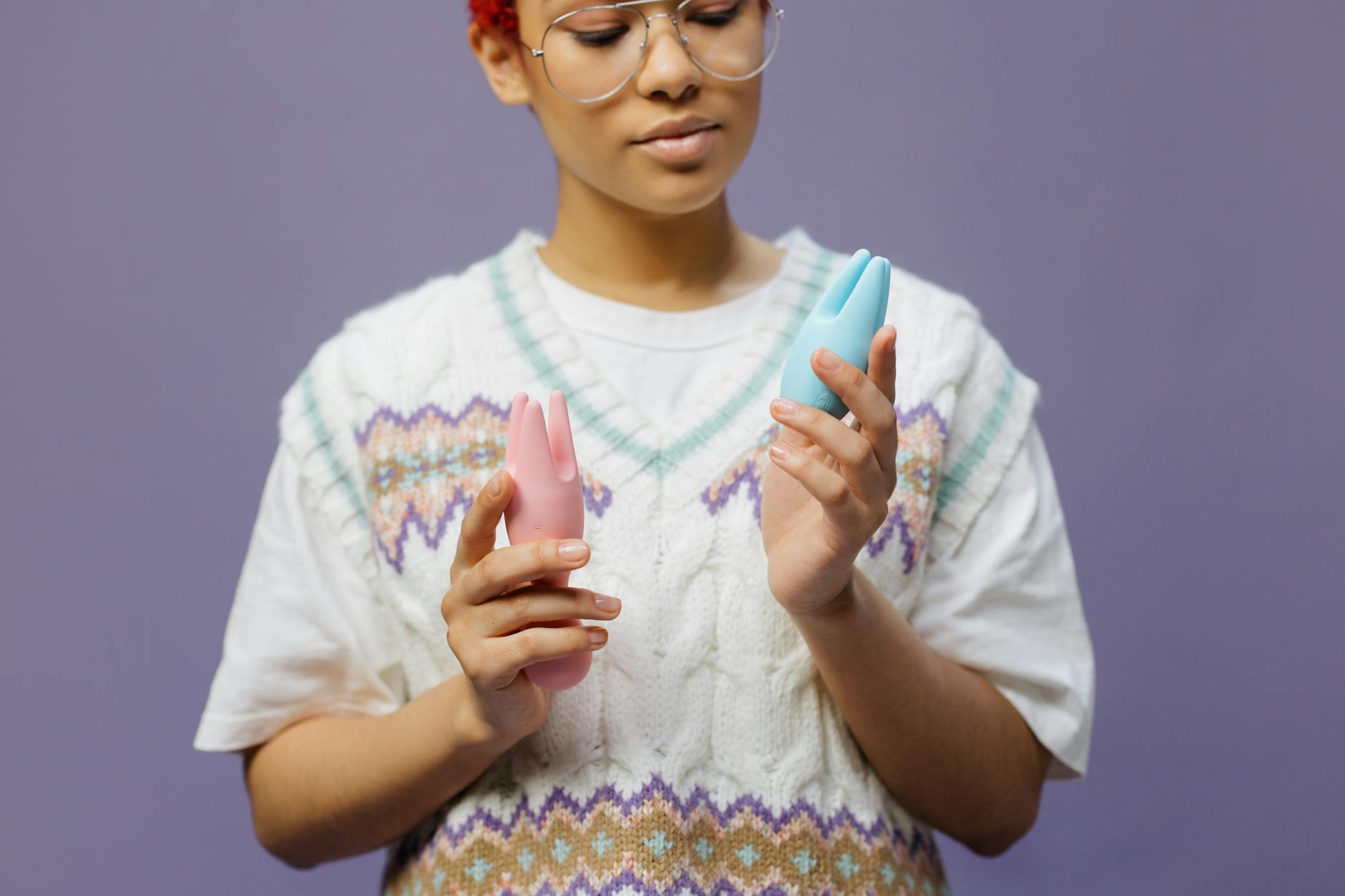
Photo by cottonbro studio on Pexels
The patterns that actually work for couples
If you're using a lemon vibrator together and sensation still feels flat, it's usually because you're still defaulting to the old rhythm. You have to actively change what you're doing, or it doesn't work.
Break the tempo. If foreplay usually lasts 15 minutes, try 25. If you usually move directly to penetration, spend 10 minutes with just the lemon vibrator and your partner's hands somewhere else (or nowhere, which is also novel). Disrupt the timeline.
Change pressure and focus. Most couples in long-term relationships develop a narrow zone of stimulation that "works." Try moving the vibrator to slightly different areas. Try different intensities. Try holding it still versus moving it. The point is to actively interrupt the muscle memory in your nervous system.
Hand involvement matters. If your partner usually stimulates you manually, having them use the lemon vibrator instead is novel for about two minutes before your nervous system adapts. But if they're also touching you with their other hand, or kissing you, or changing what they're doing with their mouth? That's complexity. That's novelty. That's what wakes up sensation.
What to expect in the first few uses
Sensation often doesn't snap back immediately. Your nervous system has been adapted to reduced input for a long time. The first time you use a lemon vibrator as a couple, you might feel more sensation, but not the kind of intense response you're hoping for. That's normal and temporary.
Use it three to five times before you evaluate whether it's working. Most couples report that around session three or four, something shifts. The novelty stops being shiny (that fades), but the actual sensation deepens because your nervous system has started properly encoding the input.
Also? Communication during use is everything. Tell your partner what feels good. Tell them when to move it. Tell them to stop if you want to pause. This active participation from both of you is actually part of what breaks the routine. You're not just relying on a script you've both memorized.
When sensation issues run deeper than routine
Sometimes couples introduce a toy and sensation still doesn't return. When that happens, it's usually because the numbness isn't really about physical routine. It might be about emotional distance, resentment you haven't named, or a deeper mismatch in what you each want from sex.
If you're using a lemon vibrator when you feel disconnected from pleasure, or if the numbness is paired with other signs of withdrawal, that's worth exploring with a therapist or counselor. A toy is a great tool for sensation fatigue caused by predictability. It's not a fix for disconnection caused by emotional rupture.
Similarly, if one partner has higher desire than the other, introducing a vibrator can help, but you might also need to address the desire mismatch itself.
Why the Lem specifically works for this problem
Air-suction technology isn't the only way to reintroduce novelty (traditional vibrators work too), but it's particularly effective for couples because it offers something that hands and mouths genuinely cannot. The mechanism is different. The sensation is different. The pressure is different. It's not incremental novelty. It's categorical novelty.
For couples where the numbness is specifically about routine predictability, that categorical difference is often what's needed to actually interrupt the pattern.
FAQ: When routine has dulled couple's sensation
Why does my body feel less sensation after years with the same partner?
Your nervous system adapts to predictable input by literally stopping to pay attention to it. This is called sensory adaptation and it's a feature of your nervous system, not a flaw in your relationship. After the same touch, rhythm, and pressure for years, your brain decides the information is irrelevant and stops firing. Air-suction vibrators work because they introduce genuinely different sensory input that your nervous system can't predict or ignore.
Can we fix this without introducing a toy?
Yes, but it requires active change to what you're already doing. You'd need to significantly alter rhythm, pressure, duration, positioning, and timing consistently. Most couples find that hard to sustain because it requires constant intentional variation. A toy makes the novelty immediate and requires less negotiation. That said, changing your routine together (different timing, different positioning, different speeds) can help if you're both committed to breaking the pattern.
Will using a vibrator make my partner feel inadequate?
Only if you frame it that way. If you position it as "you're not enough," they will feel hurt. If you frame it as "my body has adapted to familiar patterns and I want to feel more alive with you," it becomes an invitation to something new rather than a referendum on their adequacy. The couples who navigate this successfully talk about it as a tool for them, not a replacement for your partner.
How often should we use a lemon vibrator for sensation to improve?
Three to five times in the first two weeks is usually enough to see a meaningful shift. After that, once or twice a week maintains the novelty. If you use it every time, your nervous system will adapt to it too and you'll lose the benefit. Novelty requires spacing.
What if we try a lemon vibrator and nothing changes?
If sensation doesn't improve after five uses, the numbness probably isn't purely about physical routine. It might be about emotional disconnection, hidden resentment, or a deeper mismatch in desire. That's worth exploring with a counselor or therapist who specializes in couples. A toy is a great tool for sensation fatigue, but it's not a fix for relationship rupture.
Is it weird to use a vibrator together if we've never talked about toys before?
It's unfamiliar, not weird. Unfamiliar things feel awkward the first time. Most couples report that the awkwardness fades by the second or third use, especially if you acknowledge it directly. You could even say out loud: "This is new and a little awkward, and I like that about it because it means we're trying something different." Naming the weirdness usually makes it less weird.
What comes next
Long-term relationships need novelty to stay awake. That novelty can come from toys, from actively changing your routine, from new timing or positioning, or from real emotional reconnection. Usually it takes multiple things working together.
If routine has numbed your sensation with a long-term partner, a lemon vibrator is a pragmatic first step. It interrupts the pattern. It provides genuine sensory novelty. And it does what every good tool does: it makes something harder slightly easier to accomplish.
The rest is up to you both. The sensation can come back. Your nervous system can wake up. Your attention can return to what's actually happening instead of what you're predicting will happen. That shift starts with something different. A lemon clitoral vibrator is just different enough to matter.