Let's be honest about the silence
Miscarriage steals more than a pregnancy. It steals the narrative you had built. You lose the future. You lose the version of yourself you were becoming. And you lose, temporarily or permanently, the ability to feel your body as a place of pleasure instead of a place of betrayal.
The sex part doesn't get talked about enough. Most people don't know what to do when grief and fear hijack the bedroom. Many couples assume they need to avoid sex entirely, or they try to resume things exactly as they were before, which creates a different kind of tension. Neither approach actually works.
Here's what I've seen in my practice: a clitoral vibrator like a lemon vibrator becomes a bridge. Not a replacement for the emotional work, but a practical tool that helps you move from "my body scared me" to "my body is still mine, and it can still feel good."
Why miscarriage changes the sexual landscape
Physically, your uterus and pelvic floor have been through a trauma. Even if the miscarriage was early, your nervous system registered it as a threat. That doesn't disappear because the pregnancy ended.
Emotionally, sex becomes loaded. It's no longer just pleasure or connection. It can feel like a risk. Some people become hyperaware of their body's signals, second-guessing every sensation. Others numb out entirely. Both responses are normal. Both make typical penetrative sex feel wrong.
What happens in a lot of couples is this: one partner wants to resume sexual contact quickly (sometimes as a way to "move on" or to feel normal), while the other partner isn't ready. That mismatch creates shame, resentment, and disconnection at exactly the moment you need each other most.
A lemon vibrator changes the math because it removes some of the pressure. It's less loaded than partnered sex. It lets you explore pleasure on your own timeline. And when you're ready, it gives both of you a way to focus on sensation and connection rather than performance.
The permission phase comes first
Before you even touch a toy, you and your partner need to agree that sex after miscarriage looks different. It has to. Pretending it doesn't creates resentment that lasts years.
Here's what I mean: if you were having sex twice a week before the miscarriage, you probably won't have it twice a week now. Not for a while. That's not failure. That's your nervous system doing exactly what it should do.
So start by talking about what "reconnection" actually means. For some couples, it's 10 minutes of touching without it leading anywhere. For others, it's solo pleasure in the same room. For some, it's exactly what you used to do but slower and with more check-ins.
There's no right answer. The point is you're choosing together instead of one of you pushing and the other resisting.
Why a lemon clitoral vibrator works better than other tools
A lemon vibrator uses suction and pulsation rather than traditional vibration. This matters after miscarriage because your tissues are more sensitive. You're carrying tension. Your pelvic floor might be gripping. The softer, rhythmic pressure of a lemon vibrator against the clitoris feels less invasive than a standard buzzing vibrator.
It also concentrates stimulation in one place. Your mind doesn't have to work as hard. You can stay present without your brain doing a running commentary on how your body should feel or what it means.
Another benefit: using a lemon clitoral vibrator with a partner creates a different dynamic than partnered sex. You're both choosing to focus on one person's pleasure, without the expectation that it will lead to penetration or reciprocation. That simplicity is healing.
The first conversation with your partner
Don't spring it on them. Say something like: "I've been thinking about how we can reconnect without it feeling like we're rushing back to normal. I found something that might help."
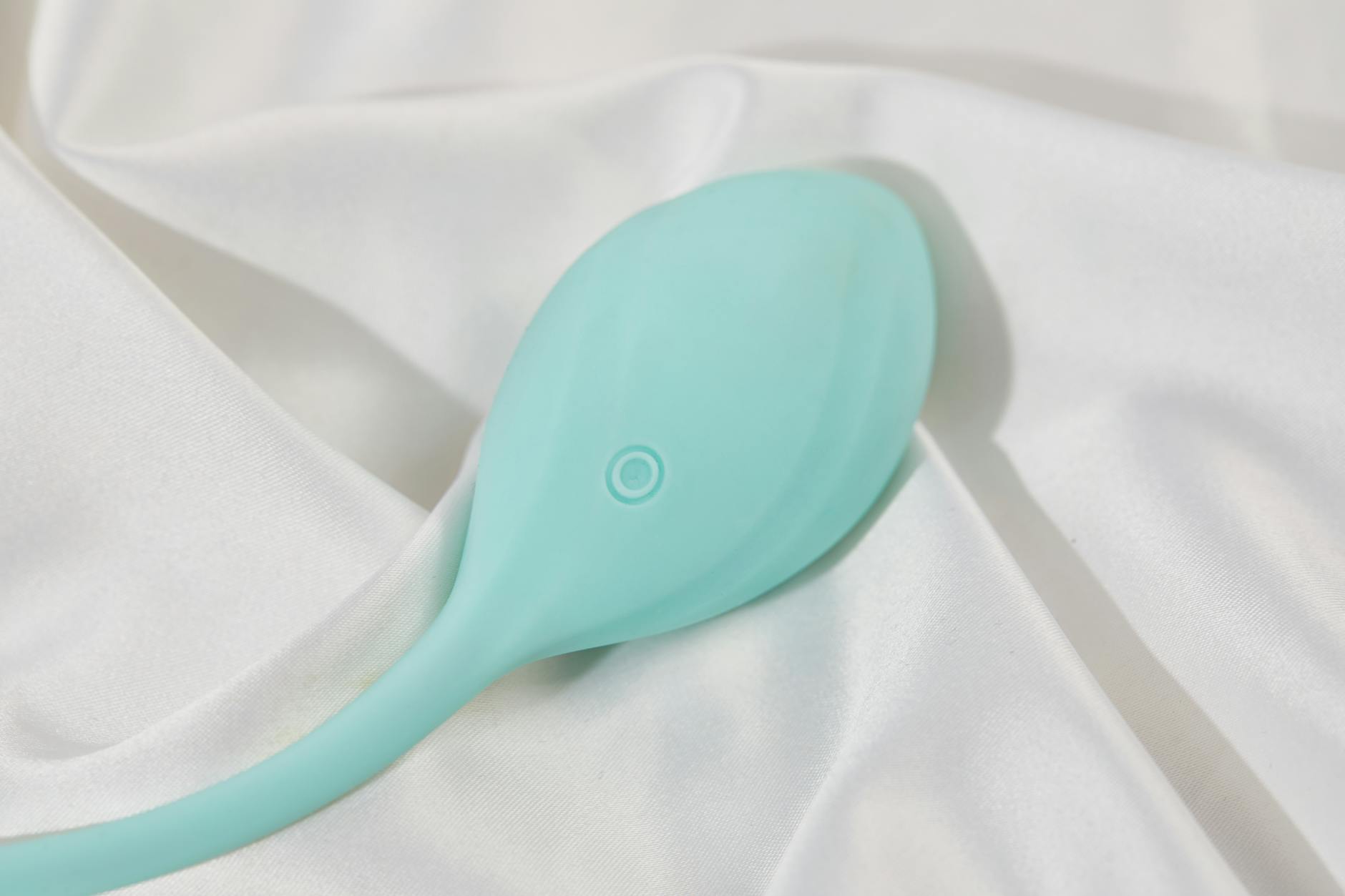
Then show them. A lemon vibrator is a physical object. It's not abstract. Let them see it, hold it, ask questions. A lot of partners worry that a toy means they've failed somehow. They haven't. Naming that fear out loud usually diffuses it.
You might say: "This isn't about replacing you or what we had. It's about giving us a way to move forward that doesn't feel scary."
If your partner is hesitant, start smaller. Maybe they just sit with you while you use it alone. Maybe they just hold your hand. The point is togetherness, not performance.
How to actually use it together
Set a time when you're both rested and emotionally available. Don't try this after a fight or when one of you is distracted.
Start clothed. Lie together, no agenda. Maybe you kiss, maybe you just hold each other. Let your bodies remember what safety feels like.
When you're both ready, you might undress partially. The person using the lemon vibrator should be comfortable. The partner can hold them, talk to them, kiss their neck. Or they can just be present and attentive.
Turn the lemon vibrator on a low setting. Start slowly. There's no timeline here. If you're numb, that's okay. If you cry, that's okay. If you need to stop, you stop.
The goal is not orgasm, even though that might happen. The goal is to teach your nervous system that your body can still feel pleasure, and that your partner is safe.
When to bring this into partnered sex
Eventually, some couples want to use a lemon clitoral vibrator as part of penetrative sex. This happens when both partners feel ready. Not before.
If you go there, add the vibrator midway through, not at the start. Your body needs time to warm up. You might use it during foreplay, or during penetration if that feels right. Your partner might hold it while you're together, which creates a different kind of intimacy than you've had before.
Again, there's no standard. Some couples never go back to penetrative sex. That's not a tragedy. That's healing.
The grief is still there
Please don't mistake this for "sex fixes miscarriage." It doesn't. Using a lemon vibrator as a couple doesn't replace grief counseling or individual therapy. It doesn't erase the loss.
What it does is remind you that pleasure and grief can coexist. Your body can still be a source of joy even though it failed you. That's not a small thing. For a lot of people, that's the turning point where they stop seeing their body as the enemy and start rebuilding trust.
Some couples find that reconnecting sexually actually deepens their emotional intimacy. You've survived something terrible together. You're rebuilding something. That shared vulnerability creates a new kind of closeness.
Red flags and when to pause
If sex becomes painful, stop. Not later, now. Pelvic floor tension after miscarriage is real, and a physical therapist can help. A lemon vibrator might actually make that worse if your pelvic floor is gripping.
If one partner feels pressured, that's a signal to pause the whole thing. You're trying to rebuild trust. Pressure destroys that work.
If grief is overwhelming and you're both just going through the motions, focus on therapy first. Sex will still be there when you're ready.
A few practical notes
If you use a Hello Nancy lemon vibrator, keep it on low settings at first. Your tissue sensitivity might surprise you. Water-based lubricant helps, even though you might think you don't need it. Warm-up time matters more than you'd expect.
Start with solo use if that feels easier. There's no hierarchy of intimacy here. Solo pleasure in the presence of your partner is legitimate and often more healing than partnered touch.
Charge the vibrator beforehand. Nothing kills a moment like hunting for batteries or waiting for a device to charge.
The bigger picture
Miscarriage is a relationship crucible. You either move through it together or you move apart. Sex doesn't fix that, but it can be part of how you move forward.
Using a lemon clitoral vibrator as a couple is a small, tangible thing you can do together when everything else feels abstract and broken. It says: "Your pleasure matters. Your body still belongs to you. We're in this together."
That's not nothing. For a lot of couples I've worked with, that's everything.
FAQ: Rebuilding intimacy after miscarriage
How long should we wait before trying any kind of sexual contact after miscarriage?
There's no universal timeline. Physically, most people can resume sexual activity after 2 to 4 weeks if the miscarriage was medically straightforward. Emotionally, it could take months or longer. Don't let anyone pressure you into a timeline that doesn't feel right. If one partner is ready and the other isn't, that's a conversation to have, not a problem to solve by pushing.
Will using a lemon vibrator hurt after miscarriage?
It shouldn't, but your body might surprise you. Tissue sensitivity increases after pregnancy loss. Start on the lowest setting. If there's pain, stop immediately and talk to your doctor. Pelvic floor tension is common after miscarriage, and a pelvic floor physical therapist can help more than a toy can.
Can we use a lemon clitoral vibrator if my partner is worried it means they're not enough?
Yes, but you need to have that conversation first. A lot of partners internalize the miscarriage as their failure somehow, or they worry a toy is a rejection. It's neither. You might say: "I want to use this with you because it helps me feel connected to my body and to you. It's not a replacement. It's a bridge."
What if we're too sad to think about sex right now?
Then don't. Seriously. Wait until you've grieved, until you've cried in front of each other, until you can sit together without it feeling like a performance. Sex after miscarriage only works when both people genuinely want it. If you're just trying to "get back to normal," it will feel hollow.
Is it normal that I feel numb during sexual contact after miscarriage?
Completely normal. Numbness is your nervous system protecting you. It doesn't mean you're broken. It means your body is doing exactly what it should do after trauma. Keep using a lemon vibrator, keep showing up for your partner, and slowly the numbness will shift. Sometimes it takes months. That's okay.
How do we know when we're actually ready to have sex again?
You'll know when both of you want it for the right reasons. Not to "move on." Not to fix the relationship. Not to avoid more grief. You're ready when you want to reconnect because pleasure and closeness matter again, even though it's grief-adjacent and complicated. When you can be together and both feel present, you're probably ready.