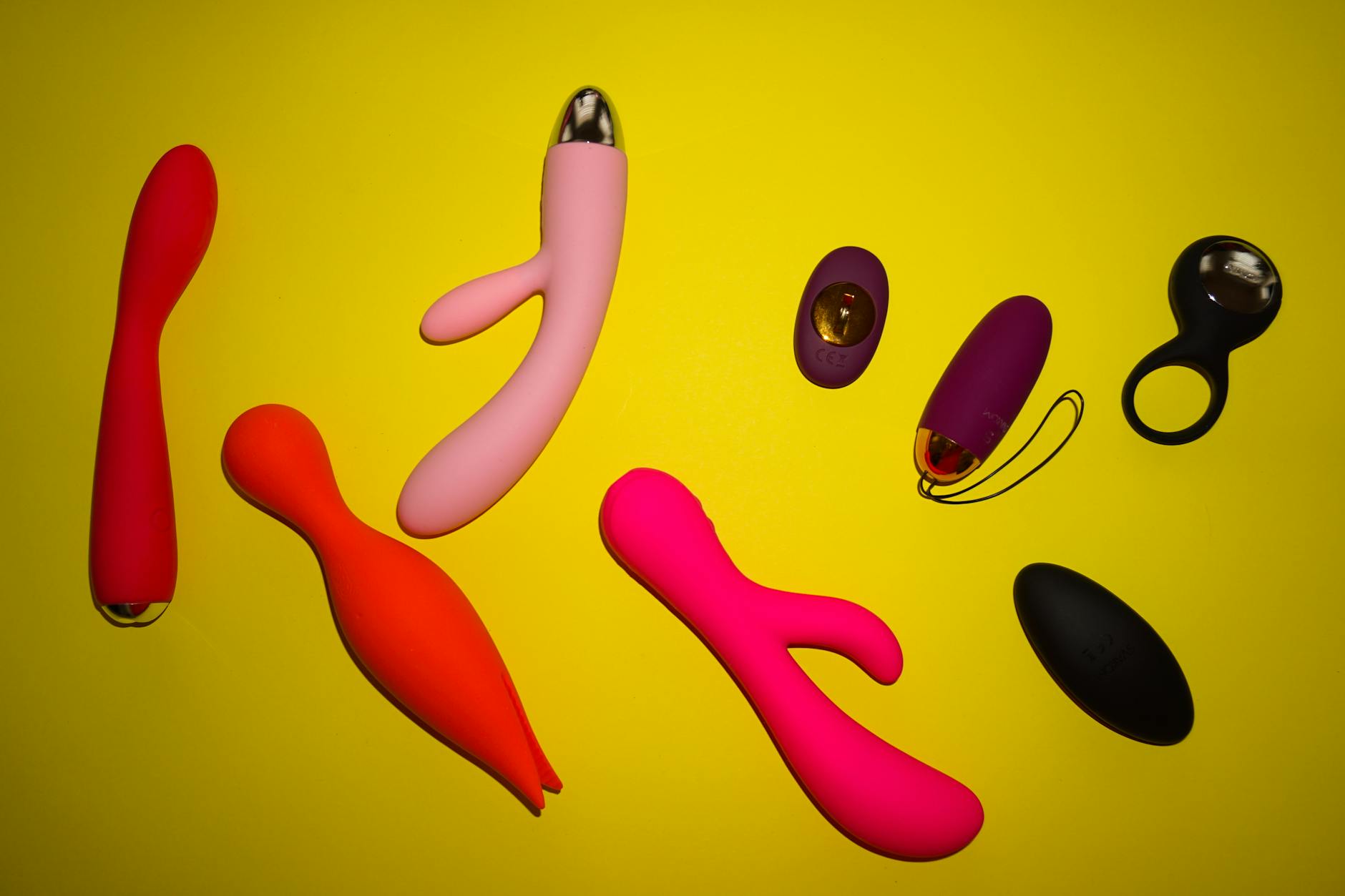
Let's be real about what divorce does to your body
Divorce doesn't just end a marriage. It ends the sexual confidence you built with another person. For months or years, you've been negotiating desire, managing expectations, sometimes performing pleasure you didn't actually feel. Then suddenly that entire structure is gone, and you're left with a body that has no idea how to want something just for itself.
That's not weakness. That's what happens when intimacy gets tangled with control, resentment, or simple incompatibility. Your nervous system learned to be guarded during sex. Retraining it takes time.
Why pleasure feels different after separation
When you've spent years modifying your own arousal to accommodate someone else's needs or insecurities, your body learns to mistrust its own signals. You might feel guilt during pleasure (leftover from a partner who used sex as control). You might feel nothing at all (protective numbness). Or you might feel aroused and then suddenly panic because arousal has been tied to conflict.
The body keeps score. Not because you're broken. Because it was doing exactly what it needed to do to survive that relationship.
Here's what changes during divorce recovery:
- Touch that once felt safe becomes triggering
- Pleasure gets mixed up with shame or grief
- Orgasm might feel impossible, or feel too intense when it arrives
- Your own hand can feel like it belongs to someone else
This is why air-suction toys like the Lem work so well post-divorce. They're different enough from partnered sex to feel genuinely new. They don't require the vulnerability of a hand. And they let you explore without anyone else's rhythm or pressure.
Starting with your body, not your pleasure
Let's skip the part where I tell you to "be patient with yourself." You know that already. Instead, let's talk about what actually happens.
The first time you touch yourself sexually after a big breakup, you're not looking for an orgasm. You're looking for the signal that your body still belongs to you. That's a different goal entirely.
Start small. Not with the Lem. With your own hand, in a bath or shower where water feels neutral and forgiving. Notice what happens. Does your chest tighten? Does your mind go blank? Does nothing happen at all? These are baseline data points, not failures.
Once you know what your body does when it's by itself, the lemon vibrator becomes a tool for deepening that conversation. Not fixing it. Deepening it.
How to introduce a Lem into solo exploration
Setting matters more than most guides admit. You need to be somewhere you feel physically safe. Not just legally safe (no one will walk in) but emotionally safe. This might mean a locked bedroom. It might mean a friend's guest room. It might mean you need six months before you're ready.
That's all okay.
When you're ready, the Lem changes things because of what it does mechanically. Air-suction stimulation pulls rather than presses. For a body that's been trained to contract against touch, that gentle pull can feel like permission. It doesn't demand. It invites.
Start at the lowest setting. Pattern one. No goal of orgasm. Your only job is to notice what you notice. Warmth? Tingling? Numbness? Grief? All valid. Spend five minutes if that's all you can manage. Spend thirty if you want to.
Repeat this a few times before you try a higher intensity. You're not building toward anything. You're building familiarity. Your nervous system needs to learn: touch I choose is safe. Touch I control is mine.
The emotional reframe that actually works
Post-divorce pleasure isn't about "getting back out there" or proving you're over it. It's about decolonizing your own body. For years, maybe decades, your arousal has been public property. It was negotiated, judged, made wrong, or just ignored.
Solo exploration with the Lem is the act of taking that back.
You don't need to arrive at huge orgasms. You don't need to feel like you're thriving. You just need to know: this pleasure is mine. I get to decide what happens. I can stop whenever I want. I can go slower. I can want more.
That psychological shift is enormous. And it happens long before the physical sensation catches up.
What to expect when sensation starts returning
Some people orgasm immediately after a breakup. Some take months. Both are normal. The Lem helps because it creates a type of stimulation that your body might not have experienced before, which means it doesn't come with the same baggage.
When sensation does return, it might feel different. Sharper. Less centered. Waves instead of peaks. Or you might find that your most intense orgasms come from the Lem instead of hands or partnered sex. This isn't weird. It's your body saying: this tool matches what I need right now.
If you hit a wall (numbness, panic, nothing working), that's information too. It might mean you need more time. It might mean you need to talk to a therapist. It might mean your body is processing grief in real time, and that's the real work happening.
Clitoral vibrators like the Lem can help you explore. They can't force your nervous system to be ready. Only time and safety do that.
When to bring other people back in
Maybe you will. Maybe you won't. But if you do, the lemon vibrator becomes useful evidence. It proves to a new partner that you know what works for your body. You've done the work. You're not figuring it out with them. You're inviting them into something you've already built.
That shifts the whole dynamic. You're not a blank slate trying to please. You're a person saying: I like this. This is what I know about myself.
Bring the Lem into partnered sex or don't. But bring the confidence it gives you. That matters more than any toy.
The timeline you need to know
There's no rush. Healing from divorce takes years, and sexual healing is just one part of it. Some people are ready for solo exploration in weeks. Some take a year or more. Your job isn't to force the timeline. It's to notice when you feel a tiny opening and gently explore it.
The Lem sits in a drawer for weeks or months. That's fine. Or you use it three times a week. That's fine too. What matters is that when you do reach for it, you're doing it for you. Not to prove you're over it. Not to seem normal. Not because you think you should.
Just because your body is asking for it.
FAQ
Is it normal to feel nothing the first time I use a lemon vibrator after divorce?
Completely normal. Numbness is often a trauma response, and relationships that end can be traumatic even when they're not dramatic. Your body might be in shutdown mode. Give yourself permission to feel nothing. Try again in a week or a month. When sensation returns, it will feel like a gift because it actually is one. Your nervous system is saying: you're safe enough now.
Should I tell a new partner I'm using the Lem to reconnect with pleasure?
That's your call, and it depends on how vulnerable you want to be. Some partners find it hot that you know your body. Some feel insecure. You get to decide what you disclose and when. There's no moral requirement to confess solo exploration. Your body is yours first.
What if orgasm feels overwhelming or wrong after divorce?
That's grief meeting relief meeting shame meeting hope all at once. It's a lot. You might cry. You might feel guilty. You might feel nothing and then feel everything later. All of this is the healing process. If it becomes unbearable, a therapist who specializes in sexual recovery can help you untangle what's happening. This isn't something the Lem caused. It's something your body is processing.
How long until I feel normal about pleasure again?
Normal is a bad metric. Most people say it takes one to three years before pleasure stops feeling like a betrayal and starts feeling like a choice. Before then, it will feel strange. Complicated. Maybe off-limits. That's not a sign something is wrong. That's a sign you're healing.
Can I use the Lem while I'm still grieving the relationship?
Yes. Grief and pleasure can coexist. Your body doesn't wait for emotional clarity to remember what arousal feels like. You can miss someone and still want to feel good. You can be rebuilding and still be healing. These aren't contradictions.
What settings should I use on the Lem when starting over?
Start at the lowest setting and stay there for several sessions. Your body needs to recalibrate without overstimulation. Once numbness starts lifting, try higher patterns. Go slow. There's no finish line. This is ongoing research into your own pleasure.
The real work is already happening
You survived a relationship ending. You're still here. Your body has been through something. Reconnecting with pleasure isn't about moving on quickly or proving you're fine. It's about slowly, carefully, convincingly teaching your body that it belongs to you again.
The Lem is just a tool for that work. The real healing happens in the space between sessions. In the days when you don't use it and your nervous system settles. In the moment you realize: I want this for me. Not for anyone else. Not to be normal. For me.
That moment is when you know you're actually coming back.