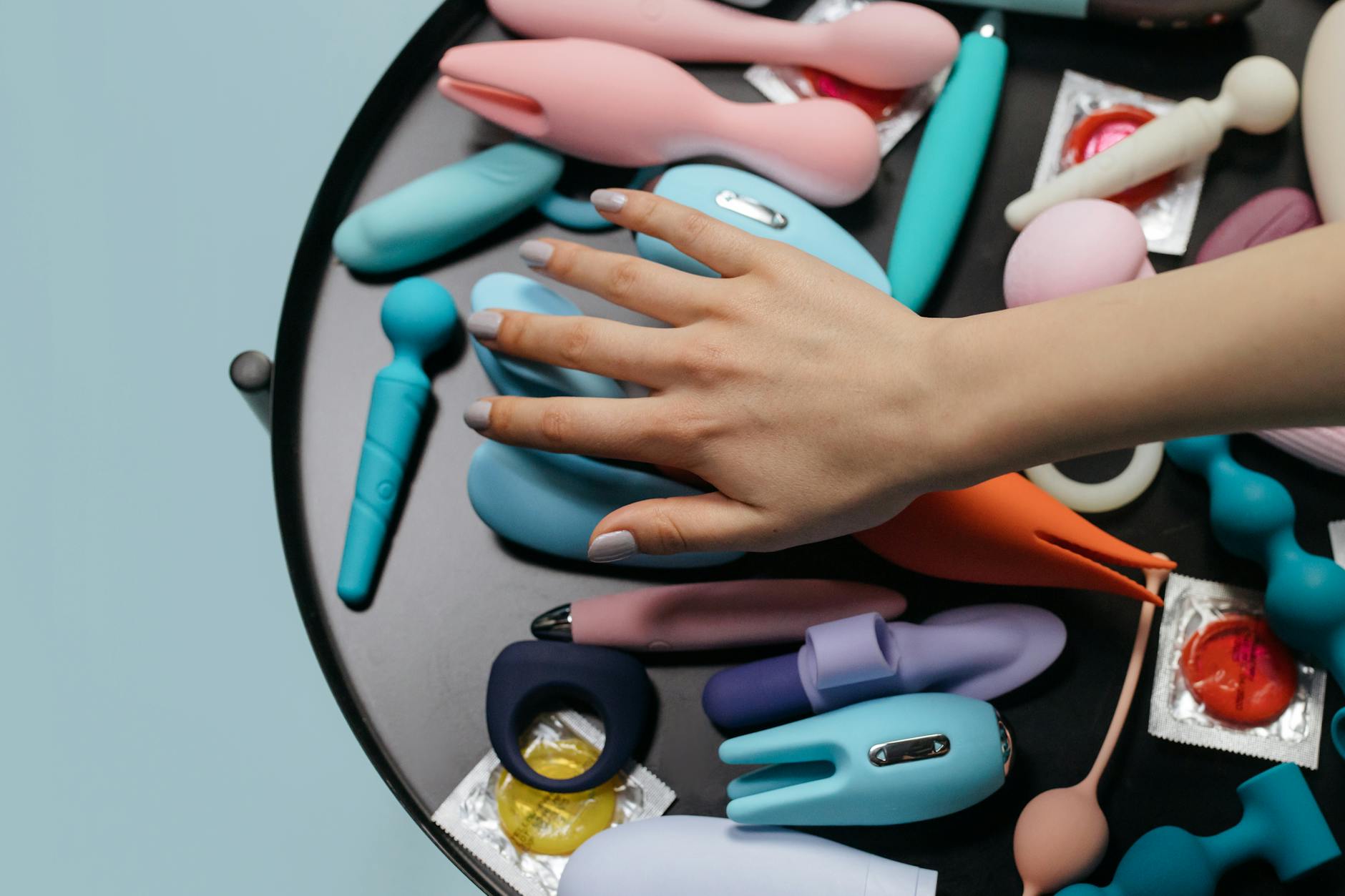
Here's the thing about sexual shame
It doesn't live in your genitals. It lives in your nervous system. Your body learned that pleasure was unsafe, wrong, or punishable. That learning ran deep. And now, when you try to access pleasure again, your brain's threat-detection system lights up like a fire alarm.
This is not brokenness. This is survival. Your nervous system did its job.
But survival mode and pleasure are fundamentally incompatible. You can't orgasm when you're defending yourself. So if you've carried sexual shame for years, reclaiming pleasure isn't about forcing arousal or "getting over it." It's about gently convincing your nervous system that sensation is safe again.
A lemon vibrator (or any clitoral vibrator, really) can be part of that conversation. Not because it's magic, but because it's predictable, controllable, and requires nothing from you except presence.
Why air-suction toys work differently for shame recovery
Most vibrators work through friction or penetration. They feel relational. They ask something of your body.
Air-suction lemon vibrators like the Lem work through gentle suction and pulsing patterns. The sensation is isolated to the clitoris, controllable by you, and totally separate from any narrative your brain attached to traditional sex.
For someone rebuilding after shame, this specificity is everything. You're not re-enacting anything. You're not replicating the experience that caused harm. You're creating something brand new.
The other advantage: you're in complete control. You set the pattern, the intensity, the duration, the stopping point. That control alone signals safety to your nervous system. You're not being taken. You're choosing. That distinction rewires something deep.
The nervous system reset: how to start
Three principles before you touch a vibrator at all:
First, separate pleasure from performance. If you're used to sex being about managing someone else's experience or meeting someone else's expectations, pleasure feels inherently selfish or wrong. It isn't. This time, pleasure is the entire point. Not as a step toward something bigger. As the destination.
Second, give yourself permission to stop. Shame often came packaged with boundary violations. Your body learned that no meant nothing. This time, stopping instantly is the rule. No explanation needed. No guilt attached. You stop, it stops. That's it.
Third, separate this exploration from any relational context. If you have a partner, that's a different conversation for a different day. Right now, this is you and your body. Alone. No audience, no negotiation, no performance.
When you're ready to actually try the lemon vibrator, here's the pacing:
Session one: get to know the patterns
Don't use the vibrator on your body yet. Hold it in your hand. Cycle through each pattern at low, medium, and high intensity. Just listen. Just feel it in your palm.
Your nervous system needs to recognize that the sensation is coming from an object you control, not from another person's body or will. This distinction matters more than it sounds.
Many people with shame histories need to do this several times before they're ready to move forward. That's fine. There's no timeline.
Session two: external exploration
Set aside 20-30 minutes of uninterrupted time. No phone, no rush to climax, no goal other than noticing what you notice.
Start at pattern 1, intensity 1. Place the Lem on your clitoris. Don't press hard. The suction does the work.
Your job: just observe. What sensations appear? Where in your body do you feel it? What emotions come up? Stay curious instead of critical.
Many people report that their first reaction is numbness or nothing. This is not failure. Shame often comes with sexual anesthesia. Your nervous system numbed sensation as another survival strategy. Sensation returns gradually, not all at once.
If numbness is what you experience, that's actually valuable information. It tells you where you are. Stay with it for 5-10 minutes, then stop. Your body doesn't owe you an orgasm. Rest is the outcome you're aiming for right now.
Moving through the resistance
Here's where most shame recovery gets tricky: your nervous system will push back. You might feel shame arise mid-session. You might suddenly "remember" why you weren't supposed to enjoy this. You might feel guilt or panic or rage.
This is not a sign to stop permanently. It's a sign that deep rewiring is happening.
When that happens, pause. Put the vibrator down. Notice the feeling without trying to change it. Stay in your body instead of leaving it. Name it aloud if you can: "I feel shame right now." "This feels unsafe." "I'm angry."
Then, when you're ready, you have three choices: explore it gently with the vibrator on a lower setting, take a break and come back tomorrow, or stop for the day and honor that as a legitimate choice.
All three are correct. Your body gets to decide.
The role of pleasure patterns
Once numbness begins to lift (usually after 3-5 sessions), you might start noticing actual sensation. Tingling. Warmth. Maybe the first edges of arousal.
This is when pattern selection matters. Patterns 1-3 on a lemon vibrator are gentler, more rhythmic. They tend to feel safer to people rebuilding after shame because they're predictable. Your nervous system can anticipate the rhythm instead of being surprised.
Patterns 4-7 are more varied and intense. Save those for later, when you've built more trust with sensation itself.
Many people find that working with just pattern 1 or 2 for the first few weeks feels more sustainable than chasing intensity.
When orgasm is not the goal
Here's the thing nobody tells you about recovering from sexual shame: you might use a lemon vibrator ten times before you have an orgasm. You might have an orgasm on the first try and then not again for weeks. You might have an orgasm and feel sad instead of good.
All of this is normal.
Orgasm is not a barometer of healing. Presence is. The ability to stay in your body instead of leaving it is. The capacity to notice sensation without judgment is.
If you approach the lemon vibrator with the intention to "make" something happen, you're back to performing. You're back to managing your body for an outcome. That's not recovery. That's just shame in a different costume.
Your only job is to show up, stay curious, and honor what your body is actually feeling.
Rebuilding at your own pace
Healing from sexual shame is not linear. Some days you'll feel ready and open. Some days your nervous system will activate without warning and pleasure will feel dangerous again. Both are part of the process.
Consistency matters more than intensity. Using a lemon vibrator for 10 minutes twice a week, with full presence and zero agenda, will rewire your nervous system faster than forcing yourself through marathon sessions hoping for a specific outcome.
If you've experienced significant sexual trauma, work with a trauma-informed therapist alongside this. A vibrator is not therapy. It's a tool for reclaiming sensation in a body that learned to defend itself. Therapy helps you understand why that defense was necessary and rewire the beliefs underneath.
You deserve to have your body feel safe. You deserve pleasure without guilt. You deserve to reclaim this part of yourself.
The lemon vibrator is just here to help.
Frequently asked questions
Can using a vibrator retraumatize me if I have a history of sexual abuse?
Potentially yes, which is why pacing matters so much. A vibrator is an object that you control completely. It can't hurt you or cross your boundaries. But your nervous system might activate as if it can, because your body learned hypervigilance. Work with a trauma-informed therapist who can help you recognize what's real threat versus what's a nervous system memory. Many people find that starting slowly, alone, with full permission to stop at any moment actually helps rewire safety.
How long before I should expect to feel pleasure again?
There's no timeline. Some people feel initial sensation within a few sessions. Others take weeks or months. The shame didn't build overnight, and unwinding it won't either. What matters is consistency and patience with yourself.
Should I tell my partner I'm using a vibrator if we're rebuilding intimacy?
That's your call entirely. Some people find that rebuilding solo first, then slowly bringing a partner into the experience later, feels safest. Others benefit from transparency from the start. Neither is wrong. What matters is that you're making the choice, not avoiding it out of shame.
What if I feel numb even after multiple sessions?
Numbness is common in shame recovery. Your nervous system numbed sensation as protection. Sensation returns gradually. If numbness persists after 6-8 weeks of consistent, patient use, check in with your doctor. Sometimes hormonal shifts, medication side effects, or other physical factors can contribute to anesthesia.
Is it normal to feel sad or angry during or after using the vibrator?
Completely normal. As sensation returns, emotion often returns with it. You might feel anger at what you were taught to feel about your body. You might feel grief for the pleasure you missed. You might feel sad that it took this long to feel safe. All of this is part of rewiring. Don't push it away. It's moving energy.
How do I know when I'm ready to involve a partner again?
When you can use a lemon vibrator and feel pleasure without shame, and when you can imagine sharing that with someone without feeling defensive or numb. This usually takes weeks to months. There's no rush. Rebuilding trust with your own body has to come first.