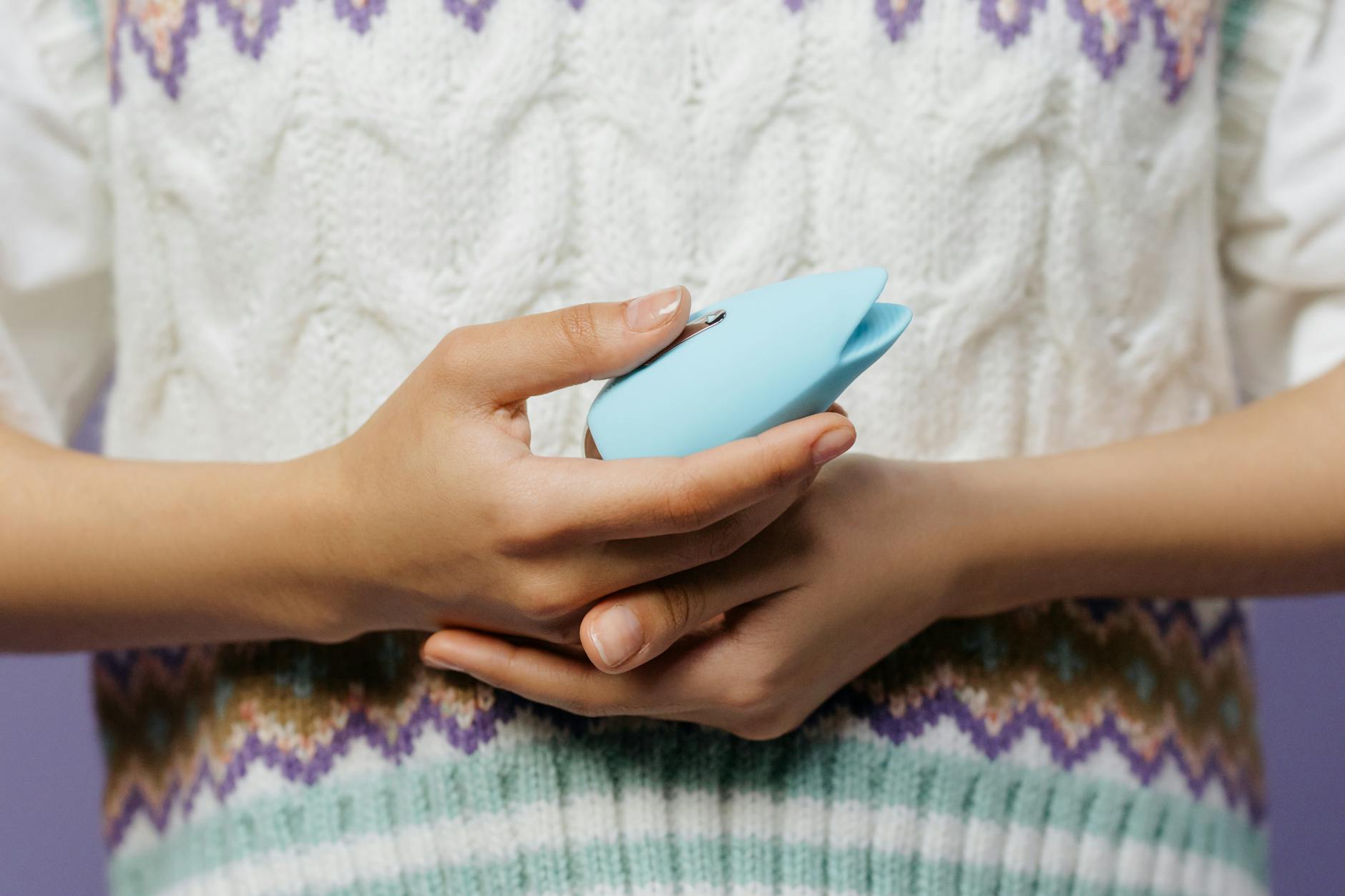
Here's what no one tells you about sensitivity
One of you lights up at pattern 5 on the Lem. The other person's threshold peaks at pattern 2. This isn't incompatibility. It's just biology, and it's wildly common. The mistake most couples make is either abandoning the toy altogether or letting one person's preference silently eclipse the other's.
A good lemon vibrator solves this. But only if you know how to talk about it first.
Why sensitivity mismatch happens
There's a lot going on under the surface. Nerve density varies. Hormones fluctuate. Trauma history, medication, stress levels, and even your nervous system's baseline sensitivity all play a role. One partner might have a stronger refractory period (the time needed between orgasms). Another might need a longer warm-up to even feel stimulation. Neither version is wrong.
The real issue emerges when you're trying to use the same toy at the same intensity and it works for one of you and leaves the other either overstimulated or underwhelmed.
The pattern solution
A lemon clitoral vibrator like the Lem has seven distinct patterns. This is your secret weapon. Instead of thinking of it as "one setting," think of it as seven different toys. This reframes the whole dynamic from "we need to compromise" to "we each have options."
Start by exploring your patterns separately first. This matters. Ask your partner to spend time solo with the lemon vibrator, find the two or three patterns they actually love, and report back. You do the same. This removes the performance pressure and gives you data.
Once you both know your preferences, you have real information to work with.
Alternating control method
One straightforward approach is to take turns holding the toy. You pick the pattern for your partner's body. They pick the pattern for yours. This creates a natural rhythm and responsibility handoff.
Start with lower patterns. Move up only if your partner actively asks for it. This prevents the creep toward intensity that happens when someone's quietly uncomfortable but doesn't want to interrupt the moment.
The person receiving gets to focus entirely on sensation and response. The person holding gets to watch what actually works, which is wildly valuable information you'll use later.
You might discover that pattern 3 with direct contact works for one of you, but pattern 4 with slight angle variation works for the other. These micro-preferences matter, and they're learnable.
Distance and angle modulation
If sensitivity is the friction point, don't just change the pattern. Change the contact itself. A lemon clitoral vibrator works beautifully at distance. You don't need direct skin-to-contact at full intensity.
Try holding the toy a quarter-inch away from your partner's skin. The sensation still translates, but it's softer. As arousal builds, you can gradually move closer. Some people find this gradual approach is more pleasurable than jumping straight to intensity.
Angle matters too. Direct suction right on the clitoris feels totally different than approaching from the side, from above, or using it with a gentle rocking motion rather than static pressure. A person who maxes out at pattern 2 might comfortably handle pattern 4 if the angle is oblique rather than dead-on.
This isn't a workaround. It's technique. And technique is how couples with mismatched sensitivity actually build a shared pleasure practice.
The communication architecture
Here's what I tell couples in my practice: sensitivity is not a taboo topic. It's logistical.
Instead of "Does this feel good," ask "What's the intensity level right now? Two out of ten? Five?" Specific numbers remove the guesswork. You're aiming for 6-7 out of ten, ideally. Anything lower and it's not registering. Anything higher and you're fighting against your nervous system.
Establish a simple signal system. A hand squeeze means "lighter." A different signal means "more intensity." Some couples use "warm" and "hot." The exact words matter less than the clarity.
And here's the thing that changes everything: check in with the less-sensitive partner too. Just because they didn't ask you to dial it back doesn't mean they're comfortable. Overstimulation often feels like numbness, not pain. So ask explicitly.
When sensitivity is tied to arousal state
Some people need 15 minutes of foreplay before a lemon vibrator even registers. Others feel it immediately. This difference can make someone seem "less sensitive" when really they're just not warmed up yet.
Build that into your routine. If one of you needs longer arousal time, that's not a flaw. That's information. Schedule longer foreplay, or use lower patterns earlier in the encounter and only introduce higher patterns once both of you are genuinely aroused.
One partner might also have a responsive sensitivity (they get more sensitive as they're stimulated) while the other has a stable sensitivity (they feel consistently the same throughout). These are different nervous systems doing different things. Neither is better.
The solo exploration permission slip
Here's something that helps tremendously. Let your partner use the lemon clitoral vibrator alone sometimes. Not instead of partnered play. In addition to it.
When you're alone, you know your own sensitivity baseline. You can crank it to pattern 6 if that's what you want, without worrying about your partner's comfort. You learn what patterns actually get you there versus what you thought should work.
Then when you come back together, you bring that knowledge. The more each person understands their own body's response, the easier partnered sex becomes.
Addressing the shame spiral
Here's where this gets real. If one partner is significantly less sensitive, they often internalize it as "something's wrong with me." If one partner is more sensitive, they can feel like they're "too much" or "too reactive."
Neither is true. Sensitivity is neutral. It's just a variable. A lemon vibrator is designed precisely because different people need different input to feel the same output of pleasure.
The shame dissolves the moment you treat this like a puzzle to solve together, not a problem one of you created.
Building the feedback loop
After each time you use a lemon vibrator together, take literally 30 seconds to debrief. "What worked? What didn't? Should we try pattern 3 again or keep exploring?" This feedback loop is how couples move from "we tolerate our difference" to "we actually know how to pleasure each other."
It also prevents resentment from building silently. If one partner keeps defaulting to the other's preferences, that bitterness comes out somewhere. Regular feedback keeps both people visible in the experience.
When medication or medical changes enter the picture
If one of you starts a medication that changes sensitivity, or has a health shift, the sensitivity mismatch might spike suddenly. Antidepressants, hormone treatments, even seasonal changes can alter how stimulation registers.
When this happens, revisit the pattern exploration step. What worked three months ago might not work now, and that's okay. Your bodies aren't static. A good lemon clitoral vibrator is flexible enough to grow with those changes.
The real win
Using a lemon vibrator with a partner who has different sensitivity isn't about forcing yourself into the same pleasure box. It's about building a shared language around sensation. Once you have that language, sex gets easier, vulnerability increases, and you actually start knowing each other's bodies instead of just hoping you're doing it right.
Frequently asked questions
Can sensitivity mismatch get better over time?
Yes, but not the way you think. Your actual nerve sensitivity probably won't change dramatically. What changes is communication clarity and technique. The more you practice using something like a lemon vibrator with intentional pattern variation and angle awareness, the better you become at creating the exact sensation each person needs. That's a learned skill, not a biological fix.
Is it okay to use a lemon vibrator at different times if we're together?
Absolutely. Some couples take turns. One person gets their pleasure first with the pattern and intensity that works for them, then you switch roles. This removes the pressure to perform at someone else's frequency and actually lets both people focus. It's a completely valid way to share a single toy.
What if my partner is so sensitive that even pattern 1 feels too intense?
You have options. Use the toy at a distance. Use it over clothing. Use it for broader stimulation rather than direct clitoral contact. Some people respond beautifully to the vibration running across the whole vulva rather than concentrated on one spot. A lemon clitoral vibrator is adaptable enough to work at most sensitivity levels with some positioning creativity.
Does sensitivity difference mean our sex drives are mismatched?
Not necessarily. Drive and sensitivity are different variables. You can have high desire but need low intensity, or low desire but respond intensely to very light touch. Don't confuse the two. A conversation about sensitivity is separate from a conversation about how often you want sex.
Should I be worried if my partner's sensitivity has changed recently?
It depends on the timeline and context. Hormonal shifts, stress, medication changes, and medical conditions all affect sensitivity. If it happened suddenly, it's worth checking in with a healthcare provider. If it's gradual or tied to a life change, it's more likely situational. Either way, a lemon vibrator gives you options to work with the sensitivity level your partner has right now, not the one they had six months ago.
Is it selfish to ask my partner to use a higher pattern than they naturally prefer?
Yes. Don't do that. Your pleasure matters, but not at the cost of your partner's comfort. This is where the solo exploration step becomes crucial. If you want a pattern your partner finds uncomfortable, use the toy alone sometimes. That's not a failure of your relationship. That's respecting boundaries while still getting what you need.
The takeaway
Sensitivity mismatch is one of the most common reasons couples either stop using toys altogether or let one person's preference silently dominate. A lemon clitoral vibrator, with its range of patterns and responsive design, is built for exactly this scenario. The real work isn't fixing the mismatch. It's learning to talk about it clearly, exploring your patterns separately first, and then building a shared technique that honors both bodies. That's how couples actually get better at pleasure together.