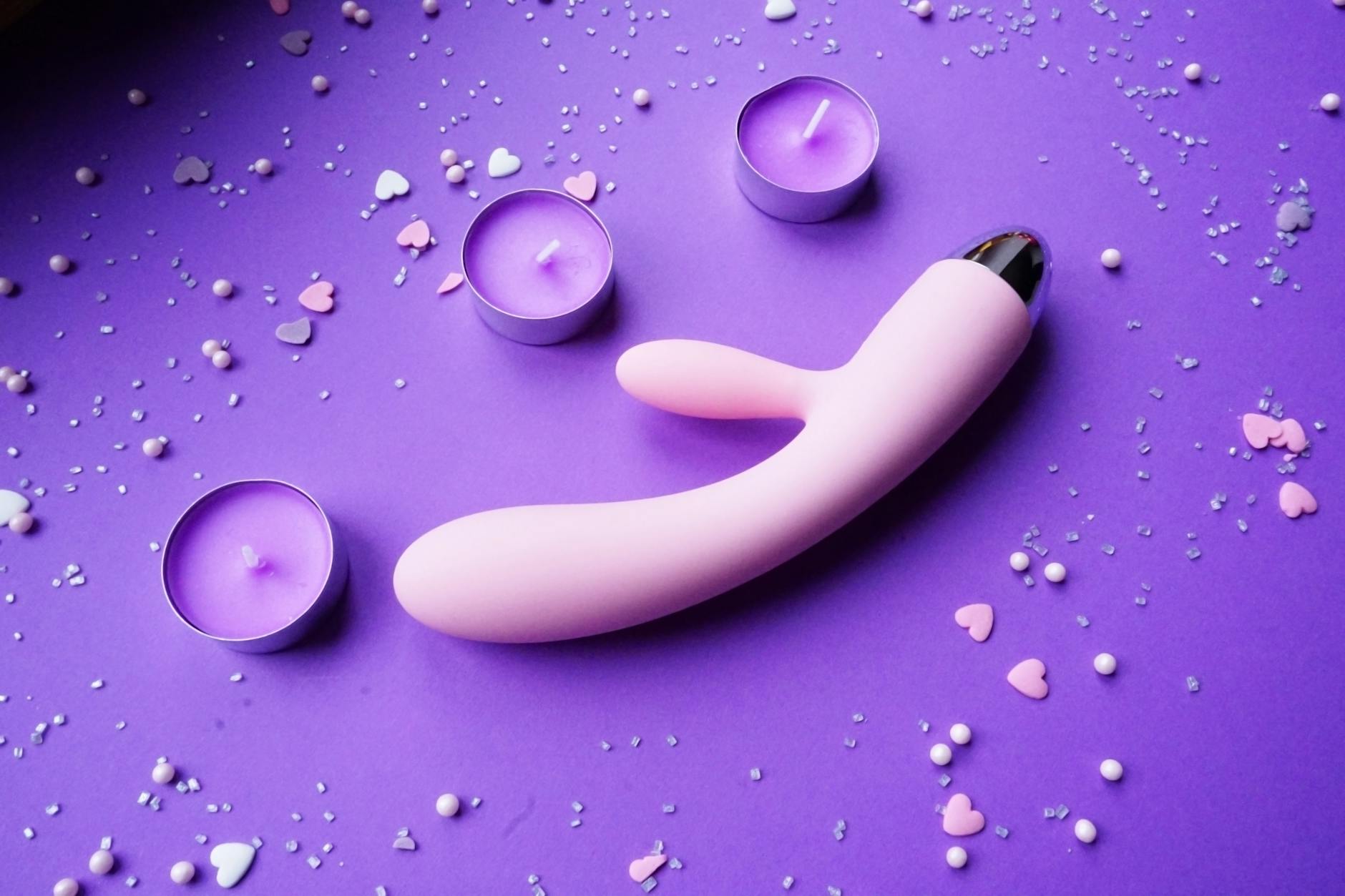
Here's what nobody warns you about
You've had the same vibrator for years. Then menopause hits, and suddenly it doesn't feel the way it used to. You're not broken. Your vibrator isn't broken. What's changed is the tissue it's touching and how your nervous system is wired to receive that stimulation. And honestly? Understanding why is the first step toward making pleasure work even better than before.
Hormonal shifts don't end your ability to orgasm. They change the access route. And when you understand how, you can adjust your approach and often discover sensations you've never had before.
What estrogen loss actually does to tissue
Estrogen keeps the vulva plump and elastic. When it drops, the tissue gets thinner. This isn't thinning in the sense of damage. It's more like moving from silk to linen. The texture is different. It's more sensitive in some places, less in others. Lubrication changes too. The body produces less of it naturally, which means vibration can feel uncomfortable if you're not adding lubrication externally.
Blood flow patterns shift as well. Arousal still happens, but it takes longer for blood to engorge the clitoris. Your clitoral bulb (the part under the surface that swells during arousal) might not plump up as quickly or as fully as it did at thirty-five. This changes what kind of stimulation feels best. Direct, intense vibration sometimes feels too raw. Gentler, broader-based stimulation often feels incredible.
Your pelvic floor muscles also lose some of their estrogen-supported tone. This doesn't mean they're weak. It means they fatigue differently. A long session with high-intensity vibration can leave you feeling sore the next day in a way that didn't happen before.
All of this is manageable. All of it is totally normal. Most importantly, none of it is permanent or irreversible.
Why air-suction devices work better for post-menopausal bodies
This is the insight that changes things for most of my clients: air-suction lemon vibrators like the Lem work differently than traditional vibration. Instead of creating friction through movement, they use gentle suction to stimulate the clitoral nerves. This matters because friction on thinner tissue can feel abrasive. Suction feels encompassing, almost like being held.
Air-suction devices also allow you to build sensation gradually. You start at a low pulse and work your way up. There's no "off and on" intensity spike. The sensation builds like a slow wave instead of a jolt. For post-menopausal bodies, this rhythm often triggers deeper, longer-lasting orgasms than traditional vibration.
Another advantage: air-suction stimulation doesn't require the same amount of direct contact. You're not pressing a vibrating surface against sensitive tissue. You're creating a pressure change around the clitoral head. It's a fundamentally different experience, and for many people over forty, it's the reason they switch to devices like lemon clitoral vibrators and never look back.
The lubrication equation (it's not optional, it's essential)
Let's get this straight: needing lubrication after menopause isn't a sign that something's wrong. It's anatomy. And using lubricant transforms the experience completely.
Water-based lubricant is your best friend. It feels natural, doesn't degrade silicone toys, and replicates the glide of natural lubrication. Apply it generously before you start. You'll need more than you think. If the lubricant starts feeling sticky instead of slick, add more water to reactivate it, or apply fresh lubricant.
Silicone-based lubricants feel thicker and last longer, but they can damage silicone toys, so stick with water-based for most devices. Coconut oil works in a pinch if you're using glass or stainless steel, but it's not ideal for silicone and can increase yeast infection risk.
The shift to lubrication isn't a loss. It's an upgrade. Most people find that the enhanced glide actually makes sensation more pleasurable, not less. You're not compensating for something missing. You're adding something that improves the whole experience.
Why warm-up time matters more now
Before menopause, you might have gotten aroused quickly. You could jump straight to penetration or intense stimulation and be fine. That's not how post-menopausal bodies work, and trying to force it is what makes people think their pleasure is broken. It's not. The arousal process just takes longer.
Budget fifteen to twenty-five minutes before you even turn on your lemon vibrator. Touch yourself without a device. Read something that turns you on. Watch something. Take a bath. Let blood flow to the area gradually. When you finally use the Lem or another clitoral vibrator, you'll be ready, and the sensation will build faster than you expect.
This "longer warm-up" isn't a burden. It's an invitation to slow down. And honestly, most of my clients tell me that this slower pace is when they start experiencing their most satisfying orgasms. Pleasure isn't about speed. It's about presence.
The intensity dial is your friend
Most vibrators have intensity settings. After menopause, start low. This isn't weakness. It's strategy. Starting at level one or two on the Lem gives your tissue time to acclimatize and your nervous system time to register what's happening. You can always turn it up. You can't undo overstimulation.
Many post-menopausal people find that they actually prefer lower-to-medium intensity. The stimulation feels richer. The orgasms are deeper. You're not chasing sensation at maximum volume. You're finding the exact frequency that resonates with your nervous system right now.
If you're used to a vibrator that only has one speed, that might be part of why it feels different. You're getting the same intensity your tissue used to tolerate, but your tissue has changed. An adjustable lemon sexual toy gives you control to match your current physiology.
When sensation gets weird (and what it means)
Sometimes after menopause, vibration feels overstimulating in a bad way. Your clitoris becomes almost too sensitive, and the vibration feels sharp or almost painful. This is genitourinary syndrome of menopause (GSM), and it's real, common, and treatable.
If this happens, stop using vibration for a week or two and see a gynecologist who understands menopause. A low-dose topical estrogen cream (applied directly to the vulva) often resolves this in a few weeks. It's not a systemic therapy. It's local treatment that rebuilds tissue health. After using it, most people go back to vibrators and find that the sensitivity resolves.
Other times, sensation changes because you need more warm-up, more lubrication, or a different device altogether. Pay attention to what feels good and what doesn't. Your body is giving you information. Listen to it.
How to talk to your partner about these changes
If you have a partner, they might notice changes too. A device or touch that used to trigger instant response now takes longer to register. That's not a sign that attraction has faded. It's just biology. And it's worth naming directly.
Say something like: "My body is responding differently now, and I'm learning what works. I'd love to explore this together." Then give your partner specific information. "I need more warm-up time." "I want to use lubrication." "I'd like to try this device together." Most partners are relieved to have clarity instead of guessing.
If you're partnered and using a vibrator alone, that's fine too. Your pleasure isn't contingent on your partner's involvement. But if they're curious and you want to include them, explicit communication makes everything better.
The plot twist: why your best orgasms might be ahead of you
Here's what I've observed in my practice over two decades: menopause often unlocks a kind of pleasure that didn't exist before. Without hormonal fluctuation, without fertility concerns, without the pressure to perform for someone else, something shifts. People slow down. They pay attention to their own sensation instead of monitoring their partner's response. They try devices they never would have considered before.
Many of my clients report that their first air-suction experience with a lemon vibrator is literally the strongest orgasm they've ever had. Not because their body got better. But because they finally had permission to stop rushing and start exploring.
Menopause is not a punctuation mark on your sexual life. It's a plot twist. And often, the story gets better from here.
FAQ: Your questions about vibrators and menopause
Why does my vibrator feel more intense after menopause?
Thinner tissue is more sensitive tissue in some ways. Vibration that used to feel moderate can now feel intense. Lower the intensity and see if sensation improves. If intensity settings aren't helping, you might benefit from switching to an air-suction device like the Lem, which distributes sensation differently.
Can I still have an orgasm after menopause with a vibrator?
Absolutely. Most people can have orgasms after menopause. They might feel different (sometimes deeper, sometimes in a different part of the body), but the capacity is there. What changes is usually the access route. With lubrication, warm-up time, and sometimes a device that works better for post-menopausal tissue, orgasms often come back strong.
Is using a lemon clitoral vibrator normal after menopause?
Yes. Lemon vibrators and other air-suction devices are specifically helpful for post-menopausal bodies because they don't rely on friction. They're increasingly popular with women over forty precisely because they work better with hormonal changes. Using one is an upgrade, not a sign that something is wrong.
How much lubrication should I use with my vibrator after menopause?
More than you think. A tablespoon is a good starting point. You want the area slick enough that your vibrator glides easily without any drag. If it starts feeling sticky, add a bit of water or reapply fresh lubricant. It's better to overshoot than undershoot.
What if my vibrator still doesn't feel good even with lubrication and warm-up?
You might need a different device. Not all vibrators work for all bodies, especially post-menopausal bodies. An air-suction lemon vibrator like the Lem works differently than a traditional vibrator, and many people find it's the missing piece. You could also see a menopause-trained gynecologist to rule out GSM.
Should I talk to my doctor about changes in pleasure after menopause?
Yes, especially if pleasure has become uncomfortable or impossible. A good menopause-informed provider can address things like GSM with topical estrogen, discuss hormone therapy options, or rule out other causes. There's no shame in asking. Doctors who work with menopausal people expect these questions.
The bottom line
Your vibrator feels different after menopause because you're experiencing real, measurable changes in tissue, blood flow, and nervous system response. None of these changes mean your pleasure is over. Most of them are completely manageable with simple adjustments: more warm-up time, lubrication, lower intensity, or a device designed differently.
For many people, the insight that air-suction devices like lemon clitoral vibrators work better than traditional vibration is genuinely life-changing. If you've struggled with your usual device, that might be the answer. If you haven't explored lemon sexual toys yet, it might be worth a try.
Your body isn't broken. It's evolved. And when you work with that evolution instead of against it, pleasure often becomes richer and more satisfying than it ever was before. That's not me being optimistic. That's what the science and my clients' lived experience show again and again.
If you're navigating these changes and want to explore what works best for your body right now, that's something worth taking time with. You deserve pleasure that actually feels good at every stage of your life.