Let's start with the thing no one talks about
Pleasure after relationship trauma is not intuitive. Your body remembers things your mind hasn't fully processed yet. You might freeze mid-orgasm. You might feel guilty for wanting pleasure at all. You might not feel anything, which is sometimes scarier than pain.
This is not broken. This is not permanent. This is normal neurobiology meeting real grief.
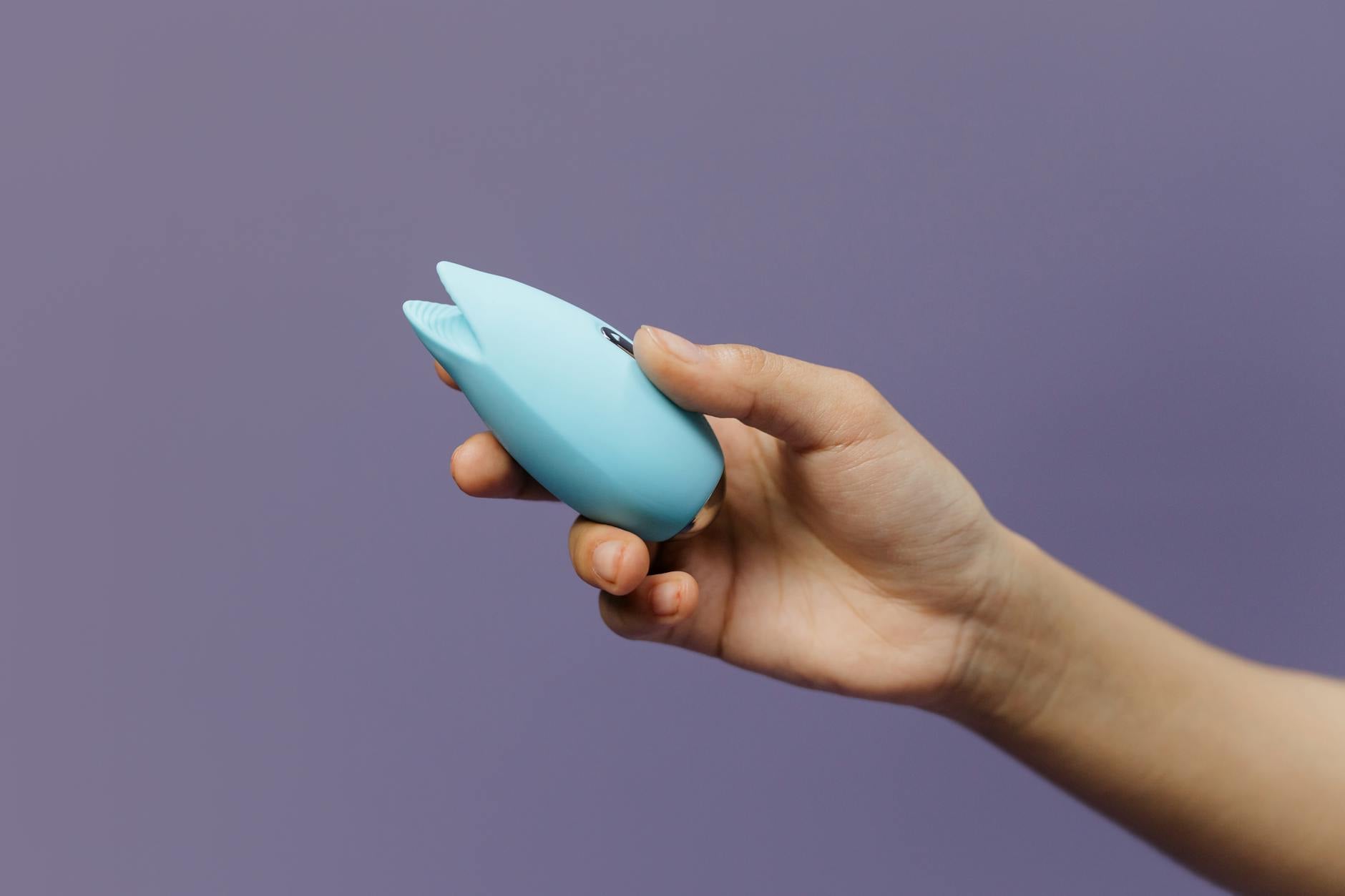
What I've seen repeatedly in my practice is that people who've experienced betrayal or abuse benefit enormously from tools that put pleasure back in their own hands. Literally. A lemon clitoral vibrator does something that a partner sometimes can't right now: it removes the vulnerability of relying on someone else for sensation. It's entirely under your control. You set the rhythm, the intensity, the stopping point. That autonomy matters more than people realize.
How trauma reshapes physical sensation
When you experience relationship trauma, your nervous system goes into protection mode. The body becomes hypervigilant. Arousal feels suspicious. Touch, even the good kind, can trigger a freeze response or a flood of anxiety that drowns out pleasure.
This happens because the brain regions that process pleasure (the ventral tegmental area and nucleus accumbens) are intimately wired to the amygdala, your threat-detection center. After betrayal or abuse, the amygdala is running hot. It's doing its job. It's keeping you safe from threat. But that same circuit is also dampening the signals that would normally create arousal and satisfaction.
The pelvic floor tightens. Lubrication decreases, not because of hormones but because the body is in a subtle state of contraction. Blood flow to the genitals reduces. Sensation dulls. Some people describe it as feeling numb. Others describe it as feeling too raw to touch at all.
Here's what a lemon vibrator does differently than a finger or a partner: it provides consistent, predictable stimulation that doesn't carry the weight of relational vulnerability. The intensity is constant. There's no performance anxiety. There's no reading another person's pleasure or managing their response.
Why the suction design matters for trauma recovery
Lemon vibrators like the Lem use air-suction technology, which creates a gentler, more diffuse sensation than traditional vibration. This matters for several reasons after trauma.
First, suction-based stimulation is fundamentally different neurologically than vibration. It triggers different nerve fibers. For people whose bodies are hypersensitive to touch, suction can feel less invasive than direct friction. It's stimulating without the intensity that sometimes triggers a freeze response.
Second, the pressure is distributed across a wider area. There's no sharp focal point. Some trauma survivors describe that sharp focus as triggering. They need the stimulation to feel diffuse, almost cloud-like. The Lem's design creates exactly that.
Third, because the sensation is less intense and more predictable, your nervous system settles faster. You're not bracing for a sudden change in intensity. Your amygdala can relax its grip. That's when pleasure becomes accessible.
The role of choice and pace in rebuilding pleasure
One of the deepest impacts of relational trauma is the loss of agency. Someone else controlled what happened to your body. That loss of choice becomes embedded in how you move through intimacy afterward.
When you use a clitoral vibrator alone, you make every single decision. How long to warm up. Which pattern to explore. When to stop. Whether to continue. Whether today is a pleasure day or a processing day. You answer to no one. That reclamation of choice is not secondary to the physical sensation. It's primary.
I often recommend that people recovering from trauma spend 3-4 weeks using a lemon vibrator purely for self-exploration, with no goal of orgasm. The goal is sensation. Noticing. Curiosity. What patterns feel good today? What intensity? How does the sensation change as your body relaxes?
That practice rebuilds the connection between your mind and your body. It teaches your nervous system that pleasure can be safe. It can be yours alone.
When you're ready to partner again
If you're eventually considering partnered sex, using a lemon vibrator alone first creates important groundwork. You know what your body likes. You know the rhythm and intensity that brings you pleasure. You've rebuilt trust in your own sensation.
When a partner enters that picture, you're not starting from scratch. You're not waiting for them to figure you out. You can say, "This is what feels good to me." That clarity is protective. It's also hot.
Many people find that incorporating a lemon clitoral vibrator into partnered sex actually deepens intimacy after trauma, because there's less pressure on the partner to be the sole source of your pleasure. The vibrator carries some of that load. The partner's role shifts to presence and attunement rather than performance. That's a healthier dynamic for everyone.
For more on navigating this transition, how to use a lemon vibrator with a new partner for the first time walks through some practical frameworks.
Practical boundaries to establish
As you're rebuilding pleasure, a few logistical things matter.
First, establish a private, lockable space for this practice. This isn't about shame. It's about creating a boundary that tells your nervous system: this time is for me alone. No interruptions. No one checking in. Your body needs to know that this space is genuinely yours.
Second, start with low-intensity patterns. If you're using a Lem, patterns 1-2. Give your nervous system time to acclimate to sensation without threat. You can always increase intensity later. You can't unscare a nervous system that's been pushed too fast.
Third, stop before you feel frustrated. The goal early on is not orgasm. It's not even necessarily pleasure in the moment. It's familiarity. Consistency. Trust. If you're chasing the orgasm and getting frustrated, you've left the healing framework. Pause. Try again another day.
Fourth, acknowledge that some days your body will be more accessible than others. Trauma recovery is not linear. You might have a week of beautiful sensation and then a week where everything feels tight and numb again. That's not failure. That's the nervous system doing what it does.
The psychological shift that matters most
What really changes after someone starts using a lemon vibrator as part of trauma recovery is their relationship to themselves. Pleasure stops being something that happens to you. It becomes something you create. You become the author of your own sensation.
I see this shift in people weeks in. They stop apologizing for wanting pleasure. They stop framing it as indulgent or selfish. They start understanding it as a practice. Like going to the gym or meditating, except the outcome is also just. Really good.
Your pleasure matters. Not because you're in a relationship. Not because you're performing for anyone. Because you're a person whose body deserves to feel good, on your terms, at your pace.
That's where healing actually lives.
People also ask
How long does it take to feel pleasure again after relationship trauma?
It depends on the severity of the trauma and your nervous system's baseline sensitivity, but most people start noticing a shift in 4-6 weeks of consistent solo practice. Some feel reconnected faster. Some take longer. There's no timeline. What matters is consistency, not speed. Your nervous system learns through repetition that pleasure is safe. That takes time.
Can I use a lemon vibrator if I'm still having flashbacks?
Yes, but with intention. Flashbacks often happen during unexpected stimulation or when you're not in control. That's why using a vibrator you control, in a space you control, at a pace you control, can actually help interrupt the flashback pattern. If you're having severe flashbacks, working with a trauma-informed therapist alongside your solo practice is ideal. They're complementary, not competing.
What if I feel guilty using a vibrator after what happened?
Guilt is a common trauma response. Your nervous system learned to be suspicious of pleasure because pleasure was weaponized against you. That guilt doesn't mean pleasure is bad for you. It means you need to reprogram that association slowly. Start with a mantra: "My pleasure is mine. It's not what happened to me. It's me reclaiming myself." It sounds simple, but your nervous system hears it.
Should I tell a partner I'm using a lemon vibrator for trauma recovery?
That's entirely your call. You don't owe anyone information about your private practice. If you're partnered and you want to stay partnered, having a conversation eventually can be useful. You might frame it as: "I'm rebuilding my relationship with my own body. This is part of that." Most partners respond well when they understand it's not about them. It's about you.
Can I use a clitoral vibrator if penetration still feels impossible?
Absolutely. External-only pleasure is completely valid. Many trauma survivors find that starting with clitoral stimulation, which doesn't require penetration, is less triggering. The lemon vibrator is designed for this. You're not working toward anything. You're just exploring sensation where it feels safe. Why lemon vibrators feel better for solo play than partnered use has more depth on this.
What if I still can't orgasm after weeks of using a vibrator?
That's okay. Orgasm is not the finish line of healing. Some people's bodies need months or years before orgasm becomes accessible again. Pleasure and sensation can exist without it. If you're feeling something, noticing something, enjoying some moment of touch, that's progress. The orgasm will come if and when your nervous system is ready.
You're not starting from scratch
Recovering pleasure after relational trauma is not about returning to who you were before. It's about becoming someone new. Someone who knows what happened. Someone who's doing the work anyway. Someone who's choosing pleasure, with full knowledge, on their own terms.
A lemon vibrator is a tool in that process. It's not a cure. It's not magic. But it does something practical: it puts the power back in your hands. Literally. And sometimes that's exactly where healing begins.
If you're working through this and want someone in your corner, we're here. Contact us anytime.