Here's what nobody tells you about birth control and pleasure
Birth control changes how your body feels sensation. Not in a broken way. Just differently. And when you switch pills, change the dose, or move to a new method, that difference can feel confusing, frustrating, or sometimes surprisingly better. The gap between what you expect to feel and what actually happens during sex or solo time is where most people get stuck.
Then you blame the toy, or blame yourself, when the real story is biochemistry. Your hormonal birth control is working exactly as intended. But your pleasure? That's adapting too.
What hormonal birth control actually does
Most birth control pills suppress ovulation by dosing you with synthetic estrogen and progestin. This steadies hormone levels instead of cycling them. That stability is the whole point medically. But your clitoris, vaginal tissue, arousal response, and orgasm intensity are all wired to estrogen and testosterone fluctuation. Steady hormones mean steady sensation, which is not the same as the dips and peaks your body evolved to feel.
Here's the mechanics: higher estrogen (like the first half of a natural cycle) makes clitoral tissue more engorged, more responsive, faster to arousal. Lower estrogen (like the luteal phase) makes everything feel flatter, less urgent, sometimes more localized. Birth control locks you into one steady dose, which your nervous system reads as "permanently mid-cycle" or "muted luteal phase," depending on the formulation.
That changes three things concretely. First, how quickly you get aroused. Second, how intense orgasms feel. Third, where on your clitoris sensation concentrates. None of this is a bug. It's just different hardware.

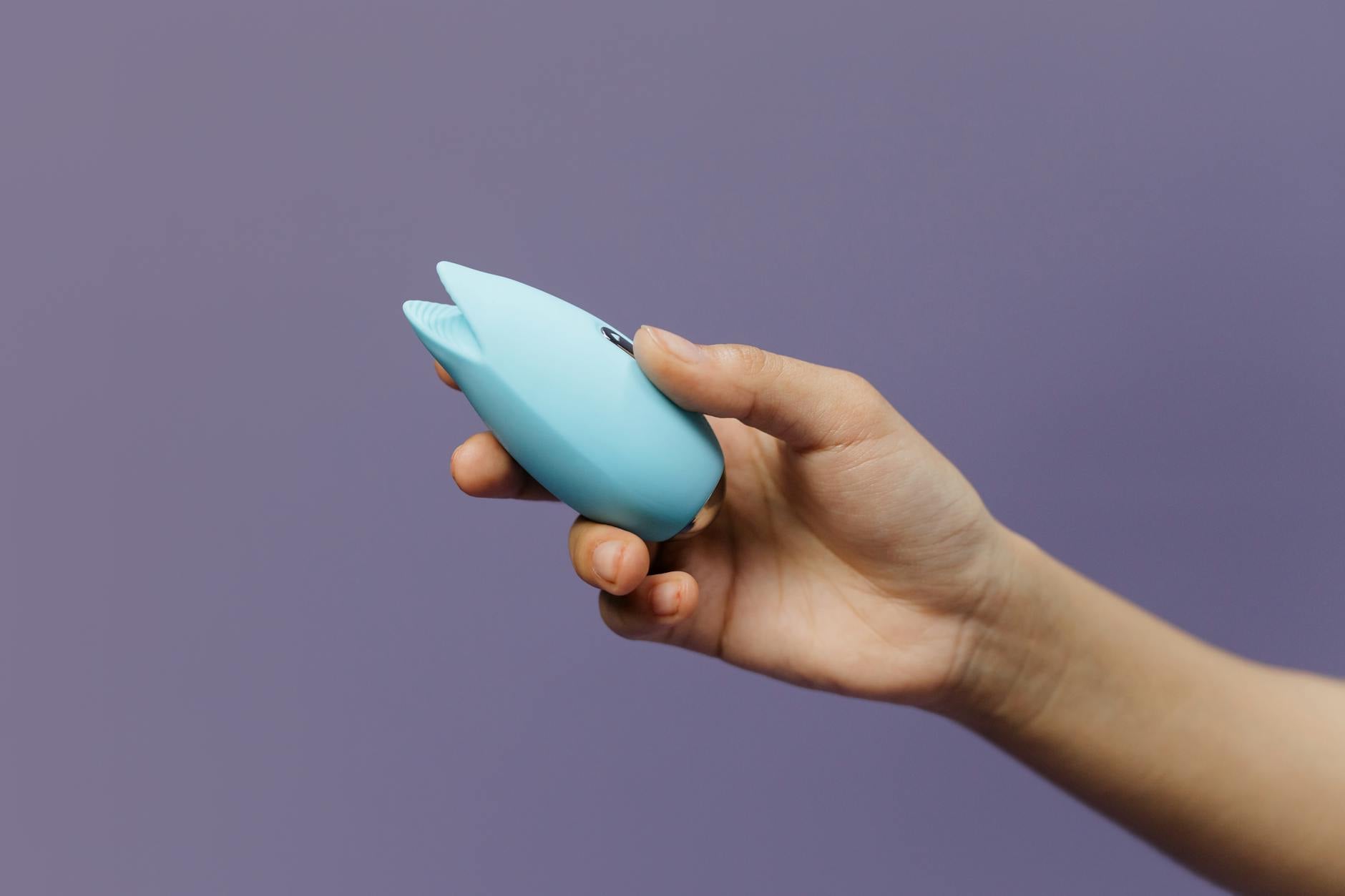
Photo by cottonbro studio on Pexels
Why lemon vibrators work differently on different birth control
The Lem, like any quality lemon clitoral vibrator, uses air-suction stimulation instead of traditional vibration. This matters for hormonal bodies because air-suction is gentler on clitoral tissue than buzzing, and it works with your body's blood flow instead of fighting it. When you're on birth control, your clitoral blood flow is steadier than it would be naturally. Steady blood flow means the suction has consistent pressure to work with.
On pills with higher synthetic estrogen, you might find the Lem feels more responsive, faster to climax. On lower-dose pills or progestin-heavy methods, you might need to start at a higher intensity setting or warm up longer before the sensation clicks. Both are normal. Your body isn't broken. The Lem is meeting you where your hormones have parked you.
When you switch birth control methods entirely (pill to patch, pill to IUD, one brand to another), the change can feel dramatic. You might go from "orgasm in two minutes" to "where did the feeling go?" That's hormonal turnover. It takes two to four weeks for your body to stabilize on a new dose and for sensation to settle into its new baseline.
The week-to-week shifts nobody warns you about
Here's where birth control gets weird. Even though the pill suppresses ovulation, your body still has a monthly rhythm. If you take a week off (the placebo week), synthetic hormones drop and your body experiences a minor dip in arousal, clitoral sensitivity, and lubrication. Some people feel almost like they're back in their natural cycle for those seven days.
Then you start the new pack. Hormone levels rebuild. Within three or four days, sensation shifts again. Some of my clients track this and deliberately time lemon vibrator sessions for the first ten days of their pill pack, when sensitivity is highest. Others find the last few days of their cycle (when pills are tapering) actually feel better because the drop in hormones mimics natural arousal patterns.
Continuous-dose pills (like Yaz or Seasonale) flatten this week-to-week rhythm entirely. No placebo week means no dip. Some people report steadier pleasure on continuous dosing. Others miss the cycle and feel bored. Again, this is just physiology finding its preference.
When switching pills means recalibrating pleasure
I work with a lot of people navigating birth control changes: new partners who want different contraception, side effects that don't sit right, dosing adjustments recommended by a gynecologist. Every switch is a sensory recalibration.
If you're moving from a standard pill to a lower-dose pill, expect arousal to take longer and orgasms to feel more subtle. This doesn't mean sensation is gone. It means you might need 20 minutes instead of 10, or the Lem on setting 2 instead of setting 1. Some people describe low-dose pills as feeling "quieter" but also "more real," like they're getting closer to a natural rhythm.
If you're moving to a higher-dose pill or adding extra estrogen, the opposite happens. Everything can feel more intense, faster, almost overwhelming if you're not expecting it. You might go from needing 15 minutes of warm-up to just five, or from needing direct clitoral pressure to the Lem on the gentlest setting feeling plenty.
The bridge period (those first two to four weeks on a new method) is where a lot of people quit, thinking something is wrong. Nothing is. Your nervous system is just recalibrating to new baseline hormone levels. Give it time.
What to do when sensation feels off
Four practical moves if your lemon vibrator suddenly feels different or worse.
First, wait. Two weeks minimum on a new birth control before deciding it's not working for pleasure. Your body is adjusting.
Second, adjust timing. If you usually use the Lem midday, try it just after your period starts (when synthetic hormone levels are rebuilding from the placebo dip). Or try it three days before your placebo week, when hormones are at their monthly peak.
Third, try a different intensity setting than you normally use. If the Lem on setting 3 felt perfect last month and now it feels numb, start at setting 1 and go slower. You're not losing sensation. You're just finding where sensation lives on your new hormonal baseline.
Fourth, talk to your gynecologist if the shift feels drastic or distressing. Some birth control methods genuinely do suppress desire or sensation more than others. Switching formulations or methods is a legitimate reason to revisit contraception with a doctor who takes pleasure seriously (not all do, but good ones exist).
The IUD question
Non-hormonal IUDs (copper Paragard) don't change hormone levels at all, so sensation stays closer to your natural cycle. Some people report that pleasure feels "more alive" on copper IUDs because they get the full range of arousal from their own estrogen and testosterone fluctuation. Lemon vibrators work the same way they do in a natural cycle, which for some feels better than the steadiness of pills.
Hormonal IUDs (Mirena, Skyla, Kyleena) release progestin directly into your uterus and bloodstream in micro-doses. You get some hormonal shift, but less systemic impact than a pill. Many people on hormonal IUDs report pleasure feels more natural than on the pill, but still softer than on a copper IUD. Again, there's no right answer. There's just your body and its preferences.
The partner conversation
If you're with a partner and your pleasure shifts because of birth control changes, the worst thing you can do is suffer silently. "I'm on a new pill and sensation feels weird" is a concrete, solvable problem. "Something's wrong with me" is a spiral.
Tell your partner that timing, intensity, or warm-up time has shifted. Show them. Use the Lem together and let them feel the settings with you. If you're someone who normally climaxes quickly and that's changed, say it out loud: "My body is adjusting to new hormones. This doesn't mean anything is wrong with us. It just means we might need to spend more time on this for the next few weeks."
Partners who care will adjust. Partners who don't matter less than your pleasure does.
Worth noting
Not every shift in sensation is birth control. Stress, sleep deprivation, relationship changes, anxiety, and depression can flatten arousal regardless of what pill you're on. But when you start a new birth control and notice changes in pleasure, the timing usually points to hormones as the culprit. Trust that timing. Your body knows what happened.
People also ask
Why does my lemon vibrator feel less intense after starting birth control?
Birth control stabilizes hormone levels, which can make clitoral tissue feel less engorged and less reactive than during a natural cycle. This is normal. Try adjusting warm-up time (longer is usually better), starting at a lower intensity setting, or shifting when in your pill cycle you use it. Some people find they feel more sensation on the third to seventh day of a new pill pack, when synthetic hormones have peaked.
Can I switch birth control methods if I want better sensation?
Yes, but talk to your gynecologist first. Copper IUDs preserve your natural hormone cycle, so sensation usually stays closest to what you'd feel without any contraception. Hormonal IUDs offer a middle ground. Continuous-dose pills flatten week-to-week variation, while traditional cycle pills preserve it. The right choice depends on your priorities: pregnancy prevention, consistency, or sensation.
How long does it take to adjust to new sensation on a different birth control?
Most people stabilize within two to four weeks. Your body will recalibrate its baseline arousal, clitoral sensitivity, and orgasm intensity. Patience here matters more than trying harder. The Lem will feel right again. It just needs time.
Does hormonal birth control affect orgasm strength?
Yes. Higher estrogen tends to make orgasms feel more intense and full-body. Lower estrogen can make them feel more localized or subtle. Continuous-dose pills sometimes make orgasms feel more muted than cyclic pills because there's no hormonal peak. This doesn't mean orgasms are worse. They're just different. Lemon clitoral vibrators can help you explore what feeling good looks like on your new hormonal baseline.
What if I feel no sensation at all on birth control?
This is rare but real, and it's usually not the lemon vibrator's fault. Some formulations genuinely suppress desire and sensation more than others. Talk to your gynecologist about switching to a lower-dose pill, a different progestin, or a non-hormonal method. Sensation usually returns. It just might require a different contraceptive approach.
Can I use a lemon vibrator safely with an IUD?
Yes. The Lem is external and doesn't interfere with IUD placement or function. Whether you're on a copper IUD, hormonal IUD, or any other method, external lemon vibrators and clitoral massagers are safe. Your sensation might feel different depending on your contraception, but the device itself poses no risk.
If you're noticing shifts in how pleasure feels and your birth control is new, give your body time to adapt. Your nervous system is learning a new hormonal language. The Lem will meet you there. And if something feels truly off after four weeks, your gynecologist is your next call. Your pleasure is worth optimizing.
Ready to dial in sensation on your body's current hormones? Explore our clitoral vibrators and find what works best for where you are right now.