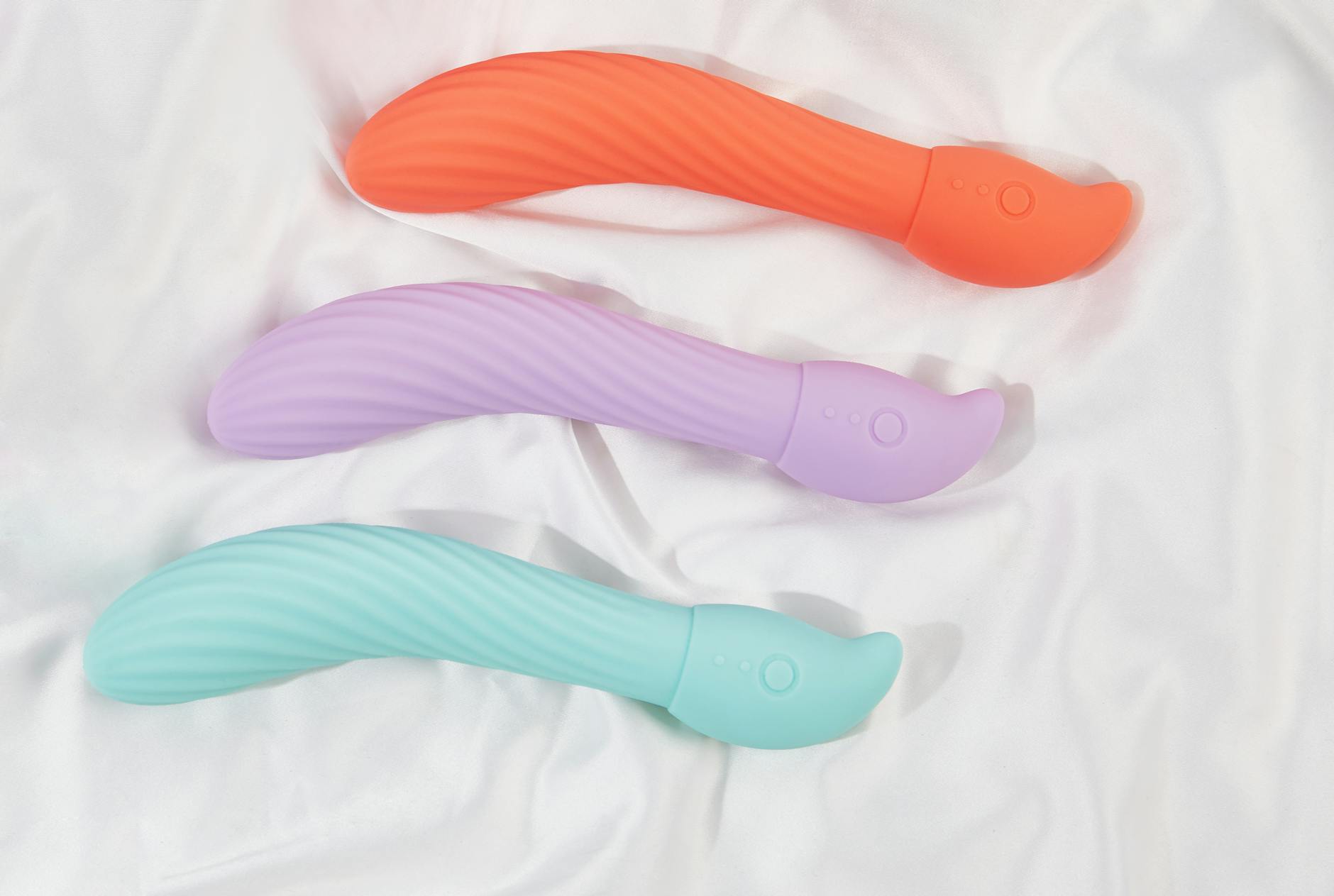
How Lemon Vibrators Work With Reduced Sensation in Midlife
Let's be real: if you've noticed that vibrators feel less effective than they used to, you're not broken. You're experiencing something neurologically and physiologically very normal. The good news is that lemon clitoral vibrators work differently than traditional vibrators, which means they often feel more pleasurable precisely when conventional toys start to feel like background noise.
Here's what's actually happening in your body, and why the lemon sucker technology is worth understanding.
Why sensation changes in midlife
Three things happen as we age. First, skin becomes less sensitive to direct pressure and vibration. The nerve endings that register these sensations don't disappear, but they require stronger or different input to fire. Second, blood flow to genital tissue decreases, which means arousal takes longer and full engorgement requires more time and stimulation. Third, estrogen decline (whether from menopause or other life stages) thins the outer layers of tissue, which can make intense vibration feel uncomfortable rather than pleasurable.
Standard vibrators rely on rapid oscillation. They buzz. Your nerve endings used to catch every frequency shift easily. Now they miss half of them. That's not a character flaw. That's nerves that have aged exactly as designed.
How suction technology changes the equation
Lemon vibrators use air-suction technology instead of (or in addition to) traditional vibration. Rather than buzzing against the clitoris, they create a gentle vacuum that stimulates the entire clitoral complex, including the internal branches that extend up into the body.
Why this matters when sensation dulls: suction activates a completely different neural pathway than vibration does. You're not asking tired nerve endings to work harder. You're engaging fresh tissue and neurological responses that haven't been worn down. It's like switching from a whisper (traditional vibration) to a hum (suction). Your ears perk up because it's a different frequency entirely.
Lemon clitoral vibrators like the Lem combine both suction and gentle pulsing patterns, which means they hit multiple pleasure pathways at once. You get the broad-stroke stimulation of suction plus the rhythmic input that helps build arousal when the body's natural arousal response has slowed.
What reduced sensation actually means for pleasure
Here's where I need to untangle a common misconception. Reduced sensation does not mean reduced capacity for orgasm. It means a different path to orgasm. You're not less capable of pleasure. You're working with a nervous system that responds to a different dial setting.
Many people report that their most intense orgasms come after their sensation dulls, not before. Why? Because they finally stop chasing vibration for its own sake and start listening to what their body actually wants. The slower buildup means more blood flow, more engorgement, and often deeper contractions during climax.
But you have to use the right tool. A lemon vibrator's suction action tends to feel gentler and more encompassing than buzzing alone. People describe it as less "attack" and more "invitation." That shift in sensation quality often resets the whole pleasure equation.
The practical setup for using lemon vibrators with reduced sensation
If you're switching from traditional vibrators to a lemon clitoral vibrator, or coming back to pleasure tools after a long gap, here's what works.
Start with suction settings in the middle range, not the lowest. I know the instinct is to go gentle, but suction actually needs enough pressure to create a seal and do its job. Low suction settings feel like nothing happening. Mid-range suction feels like something is working. (This is different from vibration settings, where lower often feels better.) Run the toy on suction alone for your first few sessions, with good lubricant. Water-based lube helps the suction create a proper seal.
Warm up longer than you think you need to. Reduced sensation means arousal builds slower. Budget 15 to 25 minutes before you introduce the toy. Let your partner know, or let yourself settle in, or both. Rushing makes everything feel muted.
Use the Lem or similar lemon sucker toys in a slow circular motion rather than a fixed position. That movement helps the suction activate different areas of the clitoral complex. You're not holding it still and letting the vibration do everything. You're actively exploring.
Common mistakes people make with reduced sensation
Mistake one: assuming you need the strongest setting. You don't. A lemon clitoral vibrator at mid to moderate suction often feels more intense than one at maximum, because you can actually feel it. Maximum settings can numb the area further, even with suction technology.
Mistake two: not using enough lubricant. Suction toys work best with a good seal. If there's no lubrication, there's no seal, and the toy feels like it's doing nothing. That's not reduced sensation talking. That's a technical failure. Add more lube.
Mistake three: expecting instant results. Sensation shift means your nervous system needs time to re-learn what pleasure feels like. Three sessions is not enough data. Give it two to three weeks of regular use before you decide a toy isn't for you.
Mistake four: continuing to use traditional vibrators that don't work and then assuming pleasure isn't possible. This is the big one. If your old vibrator feels like nothing, that's not a message that pleasure has left. It's a message that this tool doesn't work for your current nervous system. The lemon vibrator often does.
When sensation shifts are connected to something deeper
Sometimes reduced sensation in pleasure is purely physiological. Sometimes it's tied to relationship changes, stress, grief, or disconnection from your own body. Those two things can look identical on the surface, but the solution is different.
If physical sensation has dulled but you still feel desire, arousal builds (just slower), and you can achieve orgasm, you're likely looking at a physiology issue. A lemon clitoral vibrator or adjustment in technique usually helps significantly. If desire itself has flatlined, arousal doesn't build at all, or orgasm feels far away even with the right toy, something else might be going on. That's worth exploring with a partner (if you have one) or a therapist. Pleasure is also emotional and relational, not just physical.
How to know if a lemon sucker toy is right for you
Try one for 15 minutes in a relaxed setting with good lube, at a mid-range suction setting, with at least 10 minutes of warm-up beforehand. If you feel something different than traditional vibrators, that's your signal. If you feel nothing, you might need more warm-up time, better lube, or a different setting. If it feels uncomfortable or too intense, lower the suction and add more lube.
The honest version: lemon clitoral vibrators work for most people with reduced sensation because they're a genuinely different technology, not just a marketing rebrand of vibration. But they're not magic. They work best paired with time, patience, lubrication, and the willingness to explore rather than rush.
Your pleasure hasn't disappeared. It's just moved to a different frequency.
People also ask
Can you use a lemon vibrator if you have numbness from vibrator overuse?
Yes, and often with good results. Numbness from overuse means the nerve endings have fatigued from constant, repetitive vibration. Suction technology stimulates different nerves, which gives the fatigued ones a break. Many people find that switching to a lemon clitoral vibrator and taking a one to two week break from traditional vibrators helps sensation return faster. If you want to learn more about recovery, our guide on how to recover clitoral sensitivity after long-term vibrator use covers this in detail.
Do lemon vibrators work if you've never had an orgasm with a vibrator before?
Absolutely. In fact, some people have their first vibrator orgasm with a lemon sucker toy after struggling with traditional vibrators for years. The difference in sensation quality makes it feel less mechanical and more integrated with the body. If you're new to vibrators entirely, take a look at how to start using lemon vibrators if you've never tried one before for step-by-step guidance.
Is suction technology safe for sensitive tissue?
Yes, when used correctly. Suction is actually gentler on thin or sensitive tissue than traditional vibration, because it doesn't rely on direct pressure or friction. Use water-based lubricant, start at mid-range suction (not the lowest setting), and if you feel any discomfort, increase the lube or lower the suction. Suction toys are designed for this and have been used clinically for years. If you have a specific tissue concern, mention it to your gynecologist, but suction-based toys are generally considered safe for post-menopausal and sensitive tissue.
How does a lemon vibrator feel different than a regular vibrator?
People describe suction-based lemon toys as broader, less intense, and more encompassing than traditional vibrators. Regular vibrators feel like rapid tapping. A lemon vibrator feels more like a gentle pull or wave. It's not better or worse. It's different, and that difference is often exactly what reduced sensation needs.
Should I use a lemon vibrator with a partner, or is it better solo?
Both work fine. Some people find that using a lemon vibrator with a partner adds a dimension of shared experience and exploration. Others prefer the control and privacy of solo use. There's no rule here. Use it however serves your pleasure.
What if a lemon vibrator still doesn't feel like much?
A few possibilities. First, you might need more warm-up time. Fifteen minutes is a floor, not a ceiling. Second, you might need better lubricant. Third, you might benefit from lower intensity settings initially, then gradually increasing. And fourth, if nothing works after a few weeks of genuine experimentation, reduced sensation might be pointing to something beyond the physical. A conversation with your partner (if applicable) or a relationship-focused therapist can help untangle whether it's purely physiological or tied to something relational or emotional.
Your pleasure matters, and the right tool makes a real difference. A lemon clitoral vibrator is often that tool, especially when sensation has shifted with age or time.