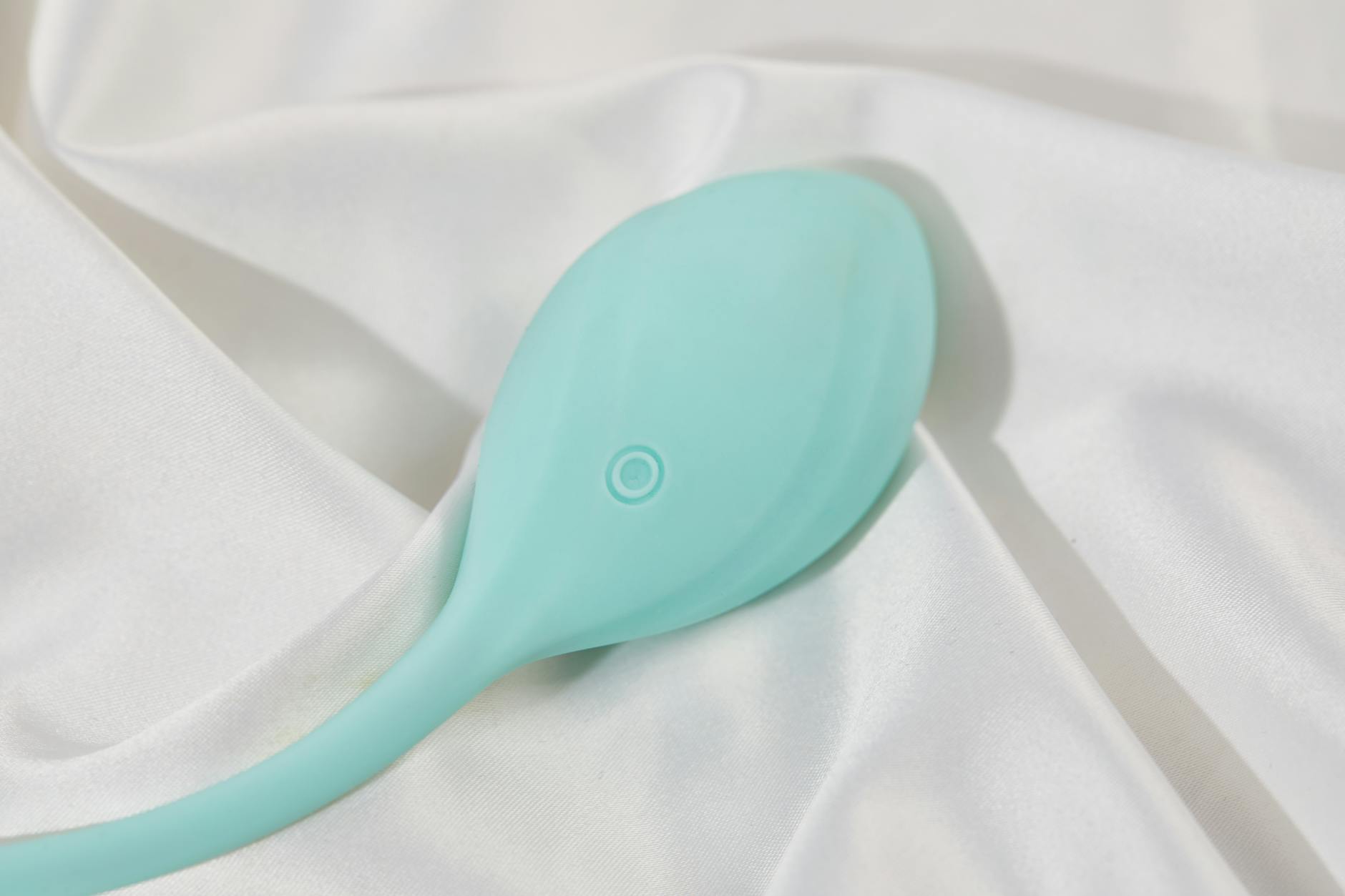
Let's talk about the thing nobody wants to bring up
Introducing a lemon vibrator into partnered sex feels risky. One of you worries the other will feel replaced or inadequate. The other worries they'll be seen as high-maintenance or needy. So nothing gets said, and the vibrator sits in a drawer, unused, because the conversation feels harder than just skipping it.
Honestly though, that's the opposite of what actually happens when you handle this right. The couples I've worked with who integrated a vibrator with actual communication almost always report deepened intimacy, not distance.
Why this conversation matters more than you think
A clitoral vibrator isn't a substitute for your partner. But if you're approaching it like it might be, that anxiety will poison the experience before it even starts. The truth is messier and better: for many people, penetration alone doesn't reliably produce orgasm. A lemon clitoral vibrator removes the pressure on both partners to make that happen through some imaginary perfect technique.
When you remove that pressure, you actually get closer. The performance mindset softens. Your partner isn't wondering if they're doing it right. You're not performing satisfaction. Instead, you're both focused on the same goal: your actual pleasure.
Before the conversation starts
Don't lead with the vibrator. That's the rookie mistake. You say, "I want to use a vibrator during sex," and they immediately hear, "Sex with you isn't enough." Their brain jumps to inadequacy before you even finish the sentence.
Start with curiosity about pleasure itself. Maybe it's "I've been thinking about what actually feels good to me," or "I want to explore some things that might feel better." You're not criticizing what you have. You're expressing interest in deepening what's possible.
If you're partnered with someone who already knows your body, frame this as evolution, not correction. "I've learned my body responds really well to this kind of stimulation" is different from "You're not doing it right." One is exploration. The other is judgment.
The actual conversation
Pick a moment that's not during sex and not right before it. This is information-sharing, not seduction. Neutral ground is important because you both need to think clearly.
Be specific about what you want and why. "I want to try using a lemon vibrator during sex" is clear. "I think it would help me orgasm more reliably" is honest. That honesty matters because it removes the guessing game.
Then stop talking and listen. Your partner might say, "I'm worried you won't need me," or "I don't know how I fit into that," or even just "That sounds weird." All of that is fixable information. Silence afterward gives them room to actually speak instead of performing agreement.
If they're hesitant, ask why. Really ask. "What specifically makes you uncomfortable?" You might get, "I'm worried I can't make you come," which is a different conversation than "I think vibrators are cheating," which is a different conversation than "I just don't like the idea." Each one gets addressed differently.
Integration basics
Start with the basics. You're using the vibrator on yourself while they're inside you or beside you. You're not replacing them. You're adding a tool that works with what you're already doing.
Many partners find they actually enjoy this more. They're not tired from the physical effort of trying to hit the right spot. They can focus on connection, movement, kissing, the parts of sex that don't require anatomical gymnastics. For some, watching their partner use a lemon vibrator is genuinely hot once the mental baggage is cleared.
Start with lower intensity settings if you're trying the Lem vibrator or another clitoral suction toy. Let them see how you use it on yourself first, outside of partnered sex. There's something de-mystifying about that. It becomes a tool, not a threat.
Managing the emotional territory
Honestly, this is where most couples lose it, even with the practical mechanics figured out. After the first time, someone's feelings come up. Maybe you came easier with the vibrator than without, which triggered something in your partner. Maybe they feel distant or like the experience was clinical.
These feelings are valid and also worth examining. If your partner's insecurity is so fragile that your orgasm feels like an attack on their manhood, that's a bigger conversation about what either of you actually believe about sex and pleasure and partnership. If it's just the normal adjustment period of doing something new, that's fixable with repetition and reassurance.
Check in after. Not the next day in a serious conversation, but in the moment. "That felt good," or "I liked that you were watching," or "That was different than I expected," all of that is real data your partner needs. They're not a mind reader, and you can't expect them to know how to feel about something new without feedback.
What actually works long-term
The couples who keep using vibrators with partners are the ones who stopped seeing it as a problem to solve and started seeing it as normal variation. On some nights you use one. On some nights you don't. Some positions work better with it. Some don't. It becomes part of your toolkit instead of an elephant in the room.
The ones who struggle are usually avoiding the fact that there's a deeper issue underneath the vibrator question. Maybe the real problem is that sex doesn't feel intimate anymore. Maybe one partner feels disconnected and hoped a vibrator would fix it instead of actually rebuilding connection first. The vibrator doesn't create that foundation. It only works on a stable base.
If you're genuinely connected, the vibrator is just a fun addition. If you're not, no toy is going to fix that. Be honest about which situation you're in.
One more thing
There's no shame in wanting the help. Your body is what it is. A lemon clitoral vibrator works with your neurology, not against it. Using one doesn't mean you're broken or high-maintenance or ungrateful for your partner. It means you're interested in your own pleasure enough to ask for what actually works. That's healthy. That's normal. And most partners, once they get over the initial surprise, actually respect that clarity.
People also ask
Does using a vibrator with my partner mean something is wrong with our sex life?
Not at all. In fact, couples who use vibrators together often report higher sexual satisfaction overall because the pressure is off. When you're not trying to make something work through willpower alone, you can actually relax and enjoy what's happening. A vibrator isn't a band-aid. It's a tool that works better than the alternatives for some people's bodies. Using one is a sign you're paying attention to what you actually need, not a sign something's broken.
Will my partner think I prefer the vibrator to them?
They might worry about that, which is why the conversation matters. You can address it directly: "I like you. This is about my body responding well to specific stimulation. You're not being replaced. You're just doing something different." Then show them. Use the vibrator while they're present, involved, touching you somewhere else. Make them part of the experience instead of an audience.
How do I know if my partner is actually okay with it or just pretending?
You watch their body. Are they engaged? Are they touching you? Are they asking questions afterward? Or are they quiet, withdrawn, not quite present? After the first time, check in. "How did that feel for you?" If they're struggling, they'll usually tell you. If they're fine, they'll usually say so. And if they're genuinely not fine, that's important information that deserves a conversation, not resentment.
Can I use a lemon clitoral vibrator if I'm worried my partner will feel insecure?
You can always use one. The question is whether this relationship has the foundation to handle that healthily. If your partner's insecurity is so intense that your pleasure feels like an attack on their worth, that's not actually a vibrator problem. That's a relationship problem that needs addressing separately, maybe with a couples therapist. A vibrator won't fix insecurity. Only the person feeling insecure can do that work.
What if my partner wants to use it on me but I'm not sure about that?
You can ease in. Try using it yourself first, alone or with them watching. When you're comfortable with how it feels, you might be open to them using it on you. You also don't have to be. Some people prefer to control the pressure and motion on sensitive tissue. That's completely valid. The beauty of bringing in a tool is that you can collaborate on how it works best for both of you.
Should I be worried my partner thinks I'm not attracted to them if I need a vibrator?
Attraction and orgasm aren't the same thing. You can be wildly attracted to someone and still need specific stimulation to come. That's just anatomy, not judgment. Some bodies need direct clitoral pressure. Some need a certain rhythm. Some need penetration plus pressure at the same time. That's not about attraction to your partner. It's about what your nervous system is wired to respond to. Be clear about that distinction, and most partners will get it.
The bottom line
Integrating a lemon vibrator into your shared sex life is one of those conversations that feels bigger before you have it than it actually is. You're not breaking anything. You're just being honest about what works. The couples who handle this well are the ones who can talk about their pleasure without shame or defensiveness. That skill is worth developing regardless of whether you ever use a vibrator. It's the foundation for everything else.
If you want more support navigating intimacy conversations with your partner, or if you're working through deeper relationship questions, reach out to me.
For more on understanding your pleasure during partnered sex, check out our guide on how to use a clitoral vibrator and our deep dive into why sensation can feel different. If numbness or reduced sensation is an issue, we cover that in detail.